Venerable Matteo Ricci: The Jesuit Who Brought the Gospel to China
Quick answer
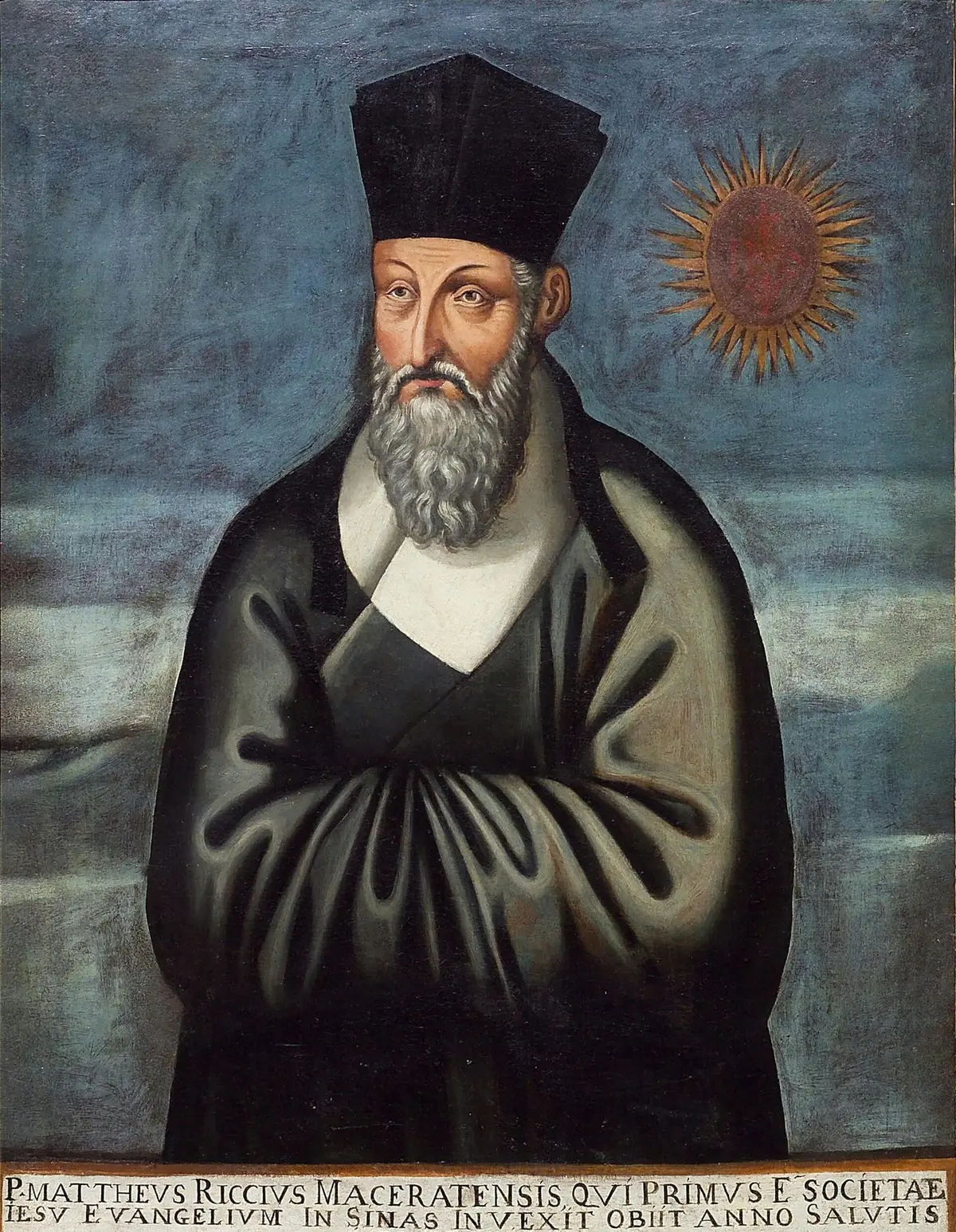
Matteo Ricci (1552–1610), an Italian Jesuit from Macerata, arrived in Macau in 1582 and spent 28 years in China. He mastered Chinese, dressed as a Confucian scholar, and won friends among the educated elite with his knowledge of mathematics, astronomy and geography. He drew a famous world map in Chinese, translated Euclid with his convert Xu Guangqi, and wrote The True Meaning of the Lord of Heaven. In 1601 he became the first European allowed to live in Beijing. When he died, the Wanli Emperor granted land for his burial, the origin of the Zhalan cemetery. Pope Francis declared him Venerable in 2022.
Key takeaways
- Ricci reached Macau in 1582 and entered mainland China in 1583.
- He adapted to Chinese culture, dressing and living as a Confucian scholar.
- His 1602 world map introduced China to the geography of the whole globe.
- With Xu Guangqi he translated the first six books of Euclid into Chinese.
- He was buried in Beijing by imperial permission and declared Venerable in 2022.
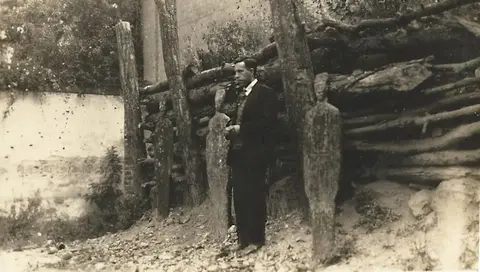
Behind the walls of a quiet campus in western Beijing, shaded by pine trees, stand the tombstones of a handful of European Jesuits. For decades the site was hidden from public view. The most famous of the graves belongs to Matteo Ricci, the Italian priest who became, in Chinese eyes, a learned scholar from the West, and who opened the way for the Gospel in the world’s most populous nation.
From Macerata to Macau
Matteo Ricci was born on October 6, 1552, in Macerata, Italy. He studied at the local Jesuit school and later law in Rome, but in 1571 he entered the Society of Jesus. At the Roman College he studied mathematics and astronomy under the great Christopher Clavius, knowledge that would later open doors for him in China.
In 1578 he sailed for India, and in 1582 he arrived in Macau, the Portuguese trading post on the Chinese coast, to prepare for a mission into China, which was closed to foreigners.
Becoming Chinese to the Chinese
With his fellow Jesuit Michele Ruggieri, Ricci entered mainland China in 1583 and settled in Zhaoqing. He studied Chinese tirelessly and became fluent in speaking and writing, memorizing the Confucian classics. At first the Jesuits dressed as Buddhist monks, but Ricci soon realized that the educated class respected Confucian scholars, so he adopted their silk robes and manners.
This was inculturation: presenting the Gospel in a way a people could understand, while keeping it whole. Ricci looked for points of contact between Confucian ethics and Christian faith, and in his catechism, The True Meaning of the Lord of Heaven (1603), he reasoned with Chinese scholars about God, the soul and morality.
Map, Clocks and Euclid
Ricci’s scientific learning fascinated Chinese scholars. His map of the world in Chinese, printed in its best-known form in 1602, showed China its place among the continents for the first time, tactfully placing China near the center. He introduced European clocks, prisms and astronomy.
With his friend and convert Xu Guangqi, a high official baptized as Paul, he translated the first six books of Euclid’s Elements into Chinese (1607). Xu, one of the “Three Pillars” of early Chinese Catholicism, is himself a candidate for sainthood.
Beijing
After years of moving north through Shaozhou, Nanjing and Nanchang, Ricci reached Beijing in 1601. He offered gifts to the Wanli Emperor, including clocks that only he knew how to repair, and became the first European permitted to live in the capital. He never met the emperor face to face, but he made many friends among officials and scholars, and the small Christian community grew.
Exhausted by work and visitors, Ricci died on May 11, 1610. In an extraordinary honor, the emperor granted land for his burial in Beijing. That plot became the Zhalan cemetery, where later Jesuits such as Johann Adam Schall von Bell and Ferdinand Verbiest, astronomers to the Qing court, were also buried.
The Tombs Through History
Company magazine told the dramatic story of the cemetery. The tombs were desecrated during the Boxer uprising of 1900 and again during the Cultural Revolution, when the stones were buried. After 1979 the tombstones of Ricci, Schall and Verbiest were restored and set up again. Today they stand inside the grounds of the Beijing Administrative College, a Communist Party school, where visitors can sometimes see them by permission.
The Chinese Rites Controversy
Ricci allowed Chinese Christians to honor Confucius and their ancestors with traditional ceremonies, which he judged to be civil and family customs rather than worship. Other missionaries disagreed, and in the 1700s Rome forbade the rites. In 1939, after careful study, Pope Pius XII permitted Catholics to take part in them as civil ceremonies, much as Ricci had proposed.
Venerable Matteo Ricci
On December 17, 2022, Pope Francis declared Matteo Ricci Venerable, recognizing that he lived the Christian virtues to a heroic degree. Pope Francis has often praised his approach as a model of dialogue between faith and culture.
Prayer for the Church in China (Original Prayer)
Lord God, You sent Your servant Matteo Ricci to bring the light of the Gospel to the people of China with wisdom, patience and friendship. Bless the Catholics of China. Strengthen them in faith, keep them united, and make them witnesses of Your love. If it be Your will, glorify Your servant Matteo among Your saints. Amen.
Continue Reading
Read about Jesuit astronomers, Jesuit mission art, or the life of St. Francis Xavier, who died on an island off China in 1552, the year Ricci was born.
Frequently asked questions
Is Matteo Ricci a saint?
Not yet. On December 17, 2022, Pope Francis declared him Venerable, recognizing his heroic virtues. A miracle would be needed for beatification.
Where is Matteo Ricci buried?
In the Zhalan cemetery in western Beijing, now inside the grounds of a Communist Party school. His tombstone stands beside those of Johann Adam Schall von Bell and Ferdinand Verbiest.
What was the Chinese Rites controversy?
A long dispute over whether Chinese Catholics could take part in ceremonies honoring Confucius and their ancestors. Ricci considered them civil rather than religious. Rome forbade them in the 1700s, but in 1939 Pope Pius XII permitted them as civil customs.
Sources
- Matteo Ricci, The True Meaning of the Lord of Heaven (Tianzhu Shiyi, 1603)
- "In Memoriam: Beijing Tombstones of the Early Jesuits," Company magazine (Spring 2002)
- R. Po-chia Hsia, A Jesuit in the Forbidden City (Oxford University Press, 2010)
- Dicastery for the Causes of Saints, decree on the heroic virtues of Matteo Ricci (December 17, 2022)