Jesuits' Bark: How Jesuit Missionaries Brought Quinine to the World
Quick answer
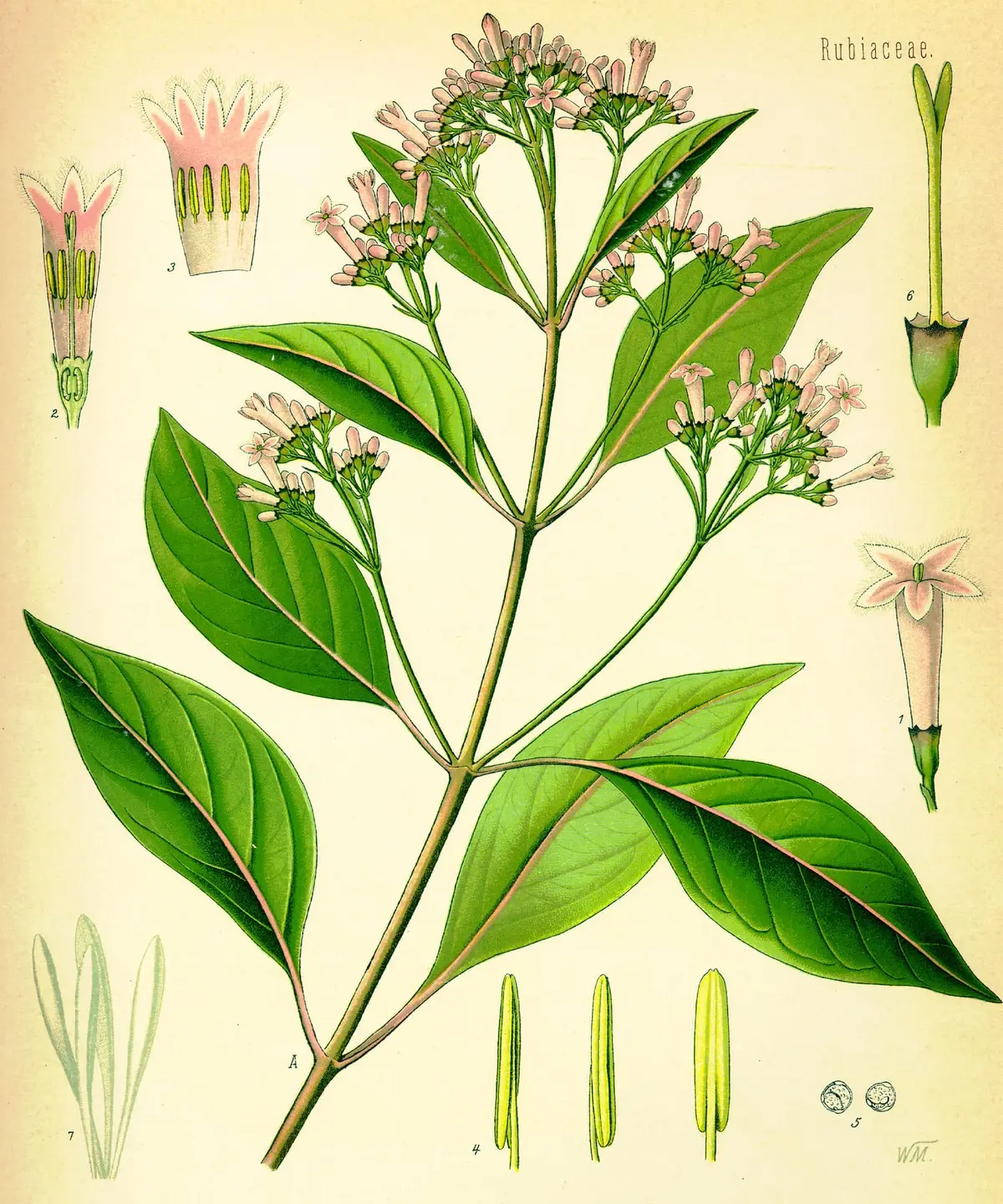
Malaria killed thousands every year in early modern Europe, including in Rome itself. Around 1630, Jesuit missionaries in Peru learned from Native peoples that the bark of the cinchona tree cured the fever. Jesuits shipped the powdered bark to Rome, where Cardinal Juan de Lugo, himself a Jesuit, promoted and distributed it to the poor. Because of its source it was called Jesuits' bark or Jesuits' powder, and in Protestant England it was feared as a popish poison. The English healer Robert Talbor secretly used it to cure King Charles II in 1678. Its active ingredient, quinine, was isolated in 1820 and remained the main malaria treatment for centuries.
Key takeaways
- Jesuits in Peru learned of the fever-curing bark from Native healers around 1630.
- Cardinal Juan de Lugo, a Jesuit, promoted the bark in Rome and gave it freely to the poor.
- In England, the name "Jesuits' powder" made many physicians and Protestants distrust it.
- Robert Talbor cured King Charles II with a secret remedy that was Jesuits' bark in disguise.
- Quinine, the bark's active compound, was isolated by French chemists in 1820.
Few remedies have saved as many lives as quinine, and few have such a surprising history. In the 17th century it was known across Europe simply as Jesuits’ bark or Jesuits’ powder, and in Protestant England its name alone was enough to make people afraid of it.
A Gift from the Andes
For centuries malaria, then called the ague or intermittent fever, killed thousands every year. Its cause, a parasite carried by mosquitoes, was unknown. It was so common around Rome that cardinals dreaded coming to the city for papal elections.
Around 1630, Jesuit missionaries working in Peru learned from Native healers that the bark of a certain Andean tree could stop the fever. A Jesuit apothecary in Lima, Br. Agostino Salumbrino, is often credited with recognizing its value and sending it to Europe. The powdered bark began to travel to Rome with returning Jesuits.
Cardinal de Lugo and the Poor of Rome
In Rome the great champion of the bark was Cardinal Juan de Lugo, a Spanish Jesuit theologian. He was convinced it was a gift of God for the sick, and he had it distributed, often free of charge, to the poor through the pharmacy of the Jesuits’ Roman College. Printed instructions explained how much to give and when. Because the Jesuits did so much to spread it, the remedy took their name.
Fear of a “Jesuit Plot” in England
In England things went badly. During an epidemic in 1658 the bark was given to a respected London alderman, who died. Rumor blamed the “Jesuits’ powder,” and some said it was a poison sent by Rome to kill Protestants. As the 1910 Catholic Encyclopedia later observed, religious hatred lay behind much of the long medical quarrel over the bark.
Robert Talbor Cures the King
The remedy finally won acceptance through an unlikely figure. Robert Talbor, an Essex healer with no medical degree, became famous for curing fevers with a secret mixture. In a 1672 book he even warned readers against “Jesuits’ powder,” yet his own remedy was the bark itself, disguised with wine and other ingredients.
In 1678, at the height of the anti-Catholic panic of the so-called Popish Plot, King Charles II fell ill with malaria. Talbor was summoned and cured him. The king knighted him and forced the College of Physicians to accept him. Talbor went on to treat the son of King Louis XIV in France. Only after his death in 1681 was it revealed that his secret was Jesuits’ bark.
From Bark to Medicine
In 1742 the Swedish botanist Carl Linnaeus named the tree Cinchona, after a legend that the Countess of Chinchón, wife of the viceroy of Peru, had been cured by it. In 1820 the French chemists Pierre Pelletier and Joseph Caventou isolated its active compound, quinine. For the next century and more, quinine was the world’s main defense against malaria, protecting soldiers, missionaries and millions of ordinary people.
Faith and Healing
The story of Jesuits’ bark reflects something deep in Catholic tradition: the conviction that care for the sick is a work of mercy and that the gifts of creation are meant for the good of all. Jesuit missionaries learned from the peoples they served, and a Jesuit cardinal made sure the poor of Rome received the cure first. The Catechism reminds us that science and technology are “precious resources when placed at the service of man” (CCC 2293).
Prayer for the Sick and for Those Who Heal (Original Prayer)
Lord Jesus, Divine Physician, You went about healing every disease and illness. Bless the sick, especially those who suffer from malaria and other fevers, and bless doctors, nurses and researchers who seek new cures. May every gift of Your creation be used for the good of all, and especially of the poor. Amen.
Continue Reading
Read about other Jesuit astronomers and scientists, the Jesuit missions of Moxos in South America, or Athanasius Kircher, the Jesuit who studied disease under the microscope.
Frequently asked questions
Why is quinine called Jesuits' bark?
Because Jesuit missionaries in Peru first brought the powdered bark of the cinchona tree to Europe in the 17th century, and Jesuits in Rome promoted it as a cure for malaria.
Where does the name cinchona come from?
The Swedish botanist Carl Linnaeus named the tree in 1742 after the Countess of Chinchón, wife of a Spanish viceroy of Peru, who according to a popular but doubtful legend was cured by the bark and brought it to Spain.
Is quinine still used today?
Quinine is still used in some cases of severe malaria, though newer drugs such as artemisinin combinations are now the first-line treatment. It is also the bitter flavor in tonic water.
Sources
- "Jesuits' Powder," Company magazine (Summer 1997)
- M. L. Duran-Reynals, The Fever Bark Tree (1946)
- Catholic Encyclopedia (1910), "Cinchona"