Banteay Prieb: The Jesuit "Center of the Dove" for the Disabled in Cambodia
Quick answer
Banteay Prieb, Khmer for "Center of the Dove," is a vocational training school for people with disabilities, located about 25 kilometers from Phnom Penh, Cambodia. The site once held a military communications center and a Khmer Rouge prison. In 1991 the government gave it to the Jesuits, and since 1994 it has been run by Jesuit Service Cambodia. Students, many of them landmine survivors or disabled by polio, spend a year learning mechanics, electronics, sewing, agriculture or sculpture, and more than 1,500 had graduated by 2009. Jesuit Service Cambodia also helped lead the international campaign to ban landmines.
Key takeaways
- Banteay Prieb means "Center of the Dove" in Khmer.
- The site was once a Khmer Rouge prison; the Jesuits received it in 1991.
- Students learn trades such as mechanics, electronics, sewing, agriculture and sculpture.
- Many students are landmine survivors or disabled by polio.
- Jesuit Service Cambodia took part in the campaign that led to the 1997 landmine ban treaty.
Twenty-five kilometers outside Phnom Penh, a sun-baked sign with a white dove marks the entrance to Banteay Prieb, the “Center of the Dove.” Today it is a peaceful campus where young people with disabilities learn a trade. Not long ago, as Company magazine reported, it was a place of fear.
From Killing Field to Field of Dreams
During Cambodia’s civil wars, the site housed a military communications center and then a prison of the Khmer Rouge, the regime responsible for the deaths of perhaps two million Cambodians in the 1970s. In 1991 the government gave the land to the Jesuits. Since 1994 it has been run by Jesuit Service Cambodia, which grew out of Jesuit Refugee Service work in the camps on the Thai border.
The Students
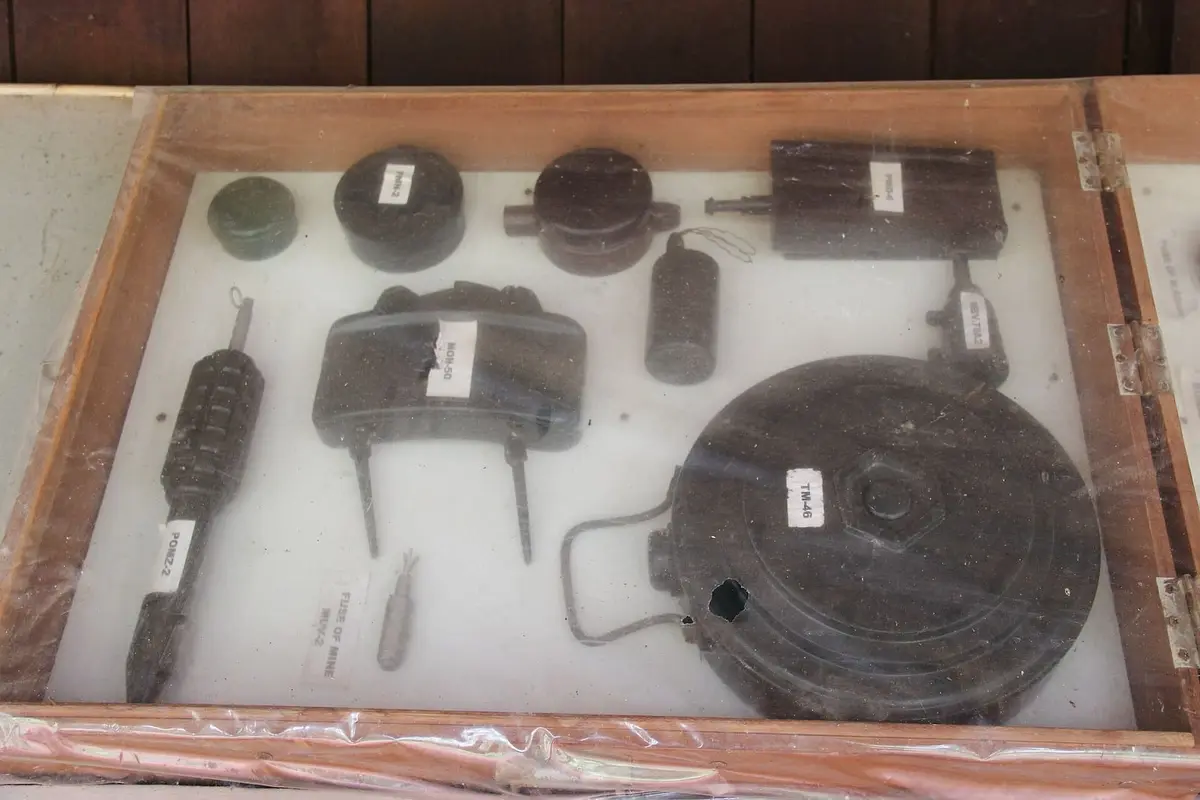
Decades of war left Cambodia with one of the largest disabled populations in the world. Landmines, polio and lack of vaccinations took the use of legs, arms and eyes from tens of thousands of people.
Each year about a hundred students arrive for a twelve-month program in one of five fields: mechanics, electronics, sewing, agriculture or sculpture. Many come from villages where, as the director Fr. In-don Oh, SJ, explained, families hid disabled children at home out of shame. In a Buddhist culture where disability is often seen as punishment for faults in a past life, self-esteem is the first thing the students must rebuild.
By the end of the year, confidence has grown. Students play volleyball, cook together and form friendships. They leave with a skill, tools and a certificate, and many open small businesses in their villages. By 2009 more than 1,500 people had trained there.
One teacher, the former army officer Chum Somon, lost both legs to an anti-tank mine in 1993. He came to Banteay Prieb to study sculpture and stayed to teach. People love his statues, a staff member said, because they have gentle smiles, “just like those of Cambodians.”
Campaigning Against Landmines
Jesuit Service Cambodia was part of the International Campaign to Ban Landmines. Students and staff at Banteay Prieb made wheelchairs and joined campaigns for the Ottawa Treaty of 1997, which banned antipersonnel mines. The campaign received the Nobel Peace Prize that year, and Tun Channareth, a landmine survivor who worked with the Jesuits in Cambodia, helped accept it.
The Gospel in Action
The Church teaches that every human person has a dignity that no disability can diminish, and that society must help persons with disabilities to live full lives (CCC 2276). Most students at Banteay Prieb are Buddhists, and the Jesuits serve them without asking them to convert, witnessing to Christ through respect and care.
Prayer for Landmine Survivors (Original Prayer)
Lord Jesus, You healed the lame and gave sight to the blind. Comfort all who have been wounded by war and landmines. Give them courage, skill and hope, and bless all who teach and care for them. Turn our weapons into tools of peace, and make us builders of a world without war. Amen.
Continue Reading
Read about the Jesuit Refugee Service, Pedro Arrupe, who founded it, or the Jesuits in Vietnam.
Frequently asked questions
Who can study at Banteay Prieb?
Young Cambodians with physical disabilities, often from poor rural villages, who are recruited by the school's staff and live on campus during a one-year training program.
What is Jesuit Service Cambodia?
The Jesuit mission in Cambodia, which grew out of Jesuit Refugee Service work in the camps on the Thai border in the 1980s. It runs education, development and disability programs and supports the small Catholic community.
Sources
- Peter Lemieux, "The Power of Hope," Company magazine (Fall 2009)
- International Campaign to Ban Landmines, history of the Ottawa Treaty (1997)