The Jesuit Missions of Moxos and the Feast of San Ignacio, Bolivia

Quick answer
The Moxos (or Mojos) missions were Jesuit mission towns founded from 1682 in the Beni region of northern Bolivia, starting with Loreto. San Ignacio de Moxos was founded in 1689. The missionaries, including the martyr Fr. Cipriano Barace, helped the Moxeño peoples build towns with churches, schools and workshops, and music became central to their life. After the Jesuits were expelled in 1767, the people kept their faith and traditions. Jesuits returned to San Ignacio in 1984, and its July festival in honor of St. Ignatius, the Ichapekene Piesta, is recognized by UNESCO as Intangible Cultural Heritage.
Key takeaways
- The first Moxos mission, Loreto, was founded in 1682 by Fr. Pedro Marbán and companions.
- San Ignacio de Moxos was founded in 1689.
- Fr. Cipriano Barace, founder of several missions, was martyred in 1702.
- The people preserved the missions' faith and music for more than two centuries after 1767.
- The Ichapekene Piesta of San Ignacio was inscribed by UNESCO in 2012.
Every July, the town of San Ignacio de Moxos, deep in the Amazon lowlands of Bolivia, celebrates its patron, St. Ignatius of Loyola, with days of processions, Masses, music and dancers in feathered headdresses. The festival goes back to the time of the Jesuit missions more than three hundred years ago. When the Jesuits returned to the region in 1984, after an absence of more than two centuries, they found a people who had never forgotten them. Fr. Enrique Jordá, SJ, one of those who returned, told the story in Company magazine.
A Land of Legends
The Spaniards called the region Moxos (or Mojos). It was also rumored to be Paititi or El Dorado, a land of hidden gold that adventurers dreamed of conquering. What they actually found was a great floodplain of rivers, savannas and forests, with many villages, farms and the remains of impressive earthworks, raised fields and canals built by its ancient peoples, evidence of real technical and organizational skill.
The Founding of the Missions
The first Jesuit to reach the area, Jerónimo de Andión, arrived in 1595, but eighty years passed before a lasting mission was founded. In 1682, Fr. Pedro Marbán, Fr. Cipriano Barace and Br. José del Castillo founded Nuestra Señora de Loreto. Seven years later, in 1689, came San Ignacio de Moxos. In time there were more than twenty mission towns among the Moxeño and neighboring peoples.
Marbán wrote a grammar and catechism in the Moxo language. Fr. Cipriano Barace, who founded several missions and introduced cattle to the region, was killed in 1702 by the Baure people to whom he had gone to preach. He is remembered as the martyr of Moxos.
Life in the Missions
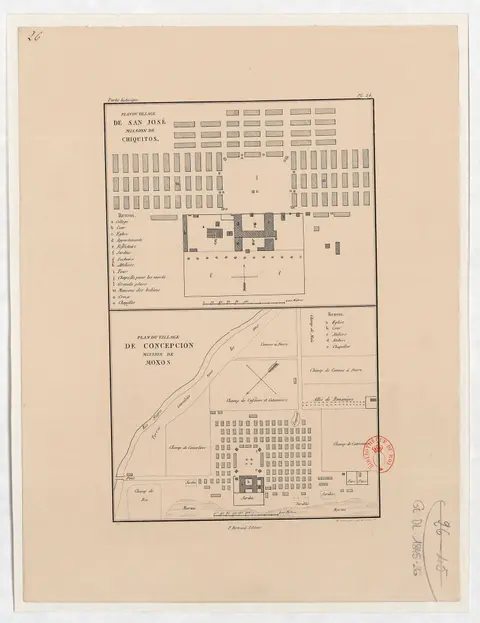
Like the neighboring missions of Chiquitos, the Moxos towns were built around a central plaza and church. The people had their own councils, cared for cattle and fields, and worked as weavers, carpenters, sculptors and silversmiths. Music filled the churches: choirs and orchestras of local musicians played Baroque music, and many mission manuscripts survive in the archives of San Ignacio. Today the town’s music school and its young musicians carry on that tradition.
Expulsion and Faithfulness
In 1767 the Spanish crown expelled the Jesuits. Without them, the missions suffered under colonial administrators, and later rubber barons took many men away to forced labor. Yet the Moxeño people kept the faith. Lay leaders, the cabildos and the church musicians, kept the churches, the prayers and the feasts alive for generations without resident priests.
The Return of 1984
When Jesuits came back to Moxos in 1984, they discovered how deep the memory ran. People still spoke of the “Padres” and kept the customs the missionaries had taught. The Jesuits took up pastoral work, education and support for the indigenous communities, working with the local Church.
The Feast of St. Ignatius
The Ichapekene Piesta, San Ignacio’s festival, culminates on July 31, the feast of St. Ignatius. It weaves together Catholic liturgy and Moxeño tradition: the macheteros dancers in great sun-like headdresses of feathers, the achus with masks representing the ancestors, fireworks, processions and Masses. In 2012 UNESCO inscribed it on its list of the Intangible Cultural Heritage of Humanity.
Why It Matters
The story of Moxos shows how deeply the Gospel can take root when missionaries respect a people’s language and culture, and how faithfully lay Catholics can keep the faith alive when priests are taken away. Read the life of the missions’ patron, St. Ignatius of Loyola, and explore Jesuit mission art.
Prayer to St. Ignatius (Original Prayer)
St. Ignatius of Loyola, patron of the people of Moxos, you taught us to find God in all things. Pray for the peoples of the Amazon, for their families, their lands and their faith. Help us to serve Christ with generous hearts, for the greater glory of God. Amen.
Continue Reading
Read about the Jesuit missions of Chiquitos, Jesuit mission art, or who the Jesuits are.
Frequently asked questions
Where is San Ignacio de Moxos?
In the department of Beni in northern Bolivia, in the Amazon lowlands about 90 kilometers west of the city of Trinidad.
What is the Ichapekene Piesta?
The great festival of San Ignacio de Moxos, held in late July in honor of St. Ignatius of Loyola. It blends Catholic liturgy with Moxeño dance, music and costume and lasts many days.
When did the Jesuits return to Moxos?
Jesuits returned to pastoral work in the area in 1984, more than two centuries after their expulsion, and found people who still held the Society in high esteem.
Sources
- Enrique Jordá, SJ, "A Return to San Ignacio," Company magazine (Spring 1998)
- UNESCO, Ichapekene Piesta, the biggest festival of San Ignacio de Moxos (2012)
- David Block, Mission Culture on the Upper Amazon (University of Nebraska Press, 1994)