St. Ignatius and the "New Christians": The Early Jesuits Against "Purity of Blood"
Quick answer
In 16th-century Spain and Portugal, "purity of blood" statutes barred Christians of Jewish or Muslim descent, called New Christians or conversos, from many offices. St. Ignatius and the first Jesuits opposed this, admitting candidates regardless of lineage; Ignatius reportedly said he would consider it a special grace to be of Jewish descent like Christ and Our Lady. Several leading early Jesuits, including the second Superior General, Diego Laínez, were of converso origin. Under pressure, the Fifth General Congregation in 1593 barred men of Jewish or Muslim descent. The rule was softened in 1608 and finally abolished in 1946.
Key takeaways
- Iberian "purity of blood" statutes discriminated against Christians of Jewish descent.
- Ignatius refused to make lineage a condition for entering the Society.
- Second Superior General Diego Laínez and secretary Juan de Polanco were of converso origin.
- In 1593 the Society, under pressure, excluded candidates of Jewish or Muslim descent.
- The 29th General Congregation abolished the restriction in 1946.
In the Spain of St. Ignatius, a person’s ancestry could close doors for life. Laws and church statutes demanded limpieza de sangre, “purity of blood,” barring Christians of Jewish or Muslim descent from universities, religious orders, cathedral chapters and public office. As historian Thomas Cohen wrote in Company magazine, the first Jesuits were among the most vocal opponents of these rules.
Who Were the New Christians?
After the mass conversions of Jews in Spain in 1391 and the expulsion of 1492, many families of Jewish origin were Catholic, often for generations. They were called New Christians or conversos. Many were devout, yet they were suspected of secretly practicing Judaism, and the Inquisition scrutinized them. From the mid-1400s, institution after institution adopted purity-of-blood statutes to exclude them.
Ignatius: “A Special Grace”
St. Ignatius refused to make lineage a condition for entering the Society. The Jesuit Constitutions looked at a candidate’s gifts and virtue, not his ancestors. His close companion Pedro de Ribadeneira recorded a remarkable conversation: Ignatius said he would hold it a special grace from Our Lord to come from the lineage of the Jews, because then he would be of the family of Christ and of the Virgin Mary.
That attitude reflected the Gospel: “There is neither Jew nor Greek… for you are all one in Christ Jesus” (Galatians 3:28).
A Haven for Conversos
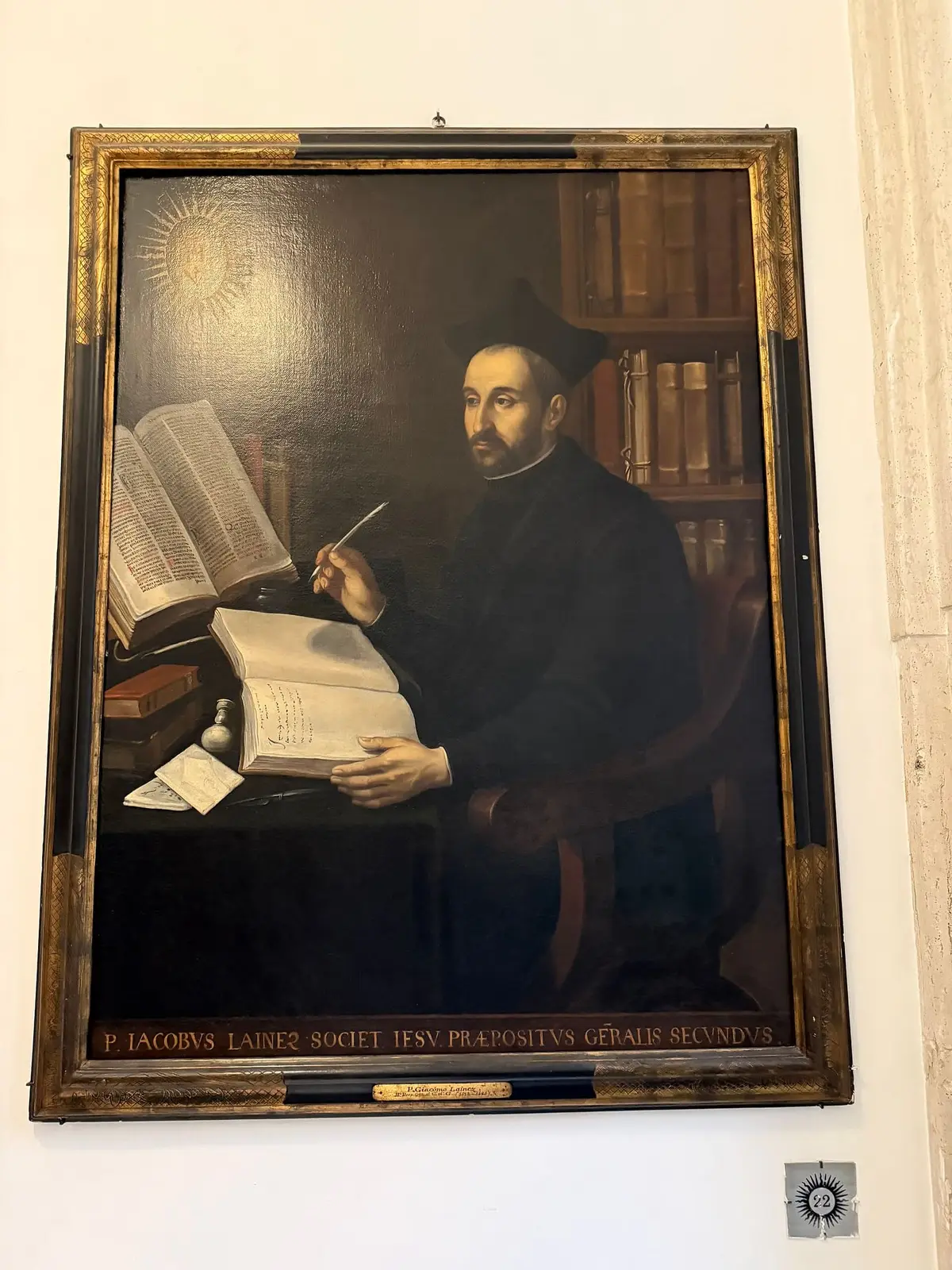
Under its first three generals, the Society became known as a home for talented New Christians. Diego Laínez, the second Superior General and a brilliant theologian at the Council of Trent, came from a converso family. So did Juan de Polanco, Ignatius’s secretary, who shaped the Constitutions, and several other leading early Jesuits.
Not everyone approved. Influential Spaniards, inside and outside the Society, resented this openness. When St. Francis Borgia died in 1572, Polanco seemed the natural successor. Pressure from Spain and from the papal court helped ensure that the Third General Congregation in 1573 elected instead the Belgian Everard Mercurian.
The Decree of 1593
The pressure grew. In 1593 the Fifth General Congregation decreed that men of Jewish or Muslim descent could no longer be admitted to the Society, a sad departure from Ignatius’s vision. In 1608 the rule was softened, limiting the inquiry to five generations of ancestry. Only in 1946 did the 29th General Congregation abolish the restriction entirely.
Beyond Europe
The same struggle appeared in the missions. Some Jesuits, such as the China missionary Nicolas Trigault, who traveled to Rome in 1613, lobbied hard for ordaining native Chinese priests and admitting Asians, Indians and Americans to the Society. Others resisted. Over time, the Church’s universal vision prevailed, and today Jesuits come from every people on earth.
What It Teaches
The Church teaches that every person has equal dignity and that every form of discrimination based on race or origin is contrary to God’s plan (CCC 1935). It also honors the Jewish people as the people of the first covenant, from whom Christ was born according to the flesh (CCC 839). The early Jesuits’ struggle reminds us how easily even good institutions can give way to prejudice, and how important it is to return to the Gospel.
Prayer for Unity and Respect (Original Prayer)
God of Abraham, Isaac and Jacob, Father of our Lord Jesus Christ, born of the Virgin Mary, a daughter of Israel, heal the wounds of prejudice in our hearts and in our history. Teach us to see every person as Your child, and make Your Church a home for all peoples. Amen.
Continue Reading
Read the life of St. Ignatius of Loyola, the list of Superior Generals of the Jesuits, or the Chinese Rites controversy.
Frequently asked questions
What were the purity of blood statutes?
Rules in Spain and Portugal, from the 15th century onward, requiring candidates for many civil, military and church positions to prove they had no Jewish or Muslim ancestors. They contradicted the Christian teaching that baptism makes all one in Christ.
Did Ignatius admit Jewish converts to the Jesuits?
Yes. He admitted Christians of Jewish descent and refused to adopt the statutes. His companion Pedro de Ribadeneira recorded that Ignatius said he would count it a special grace from God to be of the lineage of Christ and the Virgin Mary.
Sources
- Thomas M. Cohen, "Clerical Matters," Company magazine (Spring 2009)
- Robert A. Maryks, The Jesuit Order as a Synagogue of Jews (Brill, 2010)
- Galatians 3:28; Catechism of the Catholic Church, nos. 839–840, 1935