Pedro Arrupe: Hiroshima Survivor and Superior General of the Jesuits
Quick answer
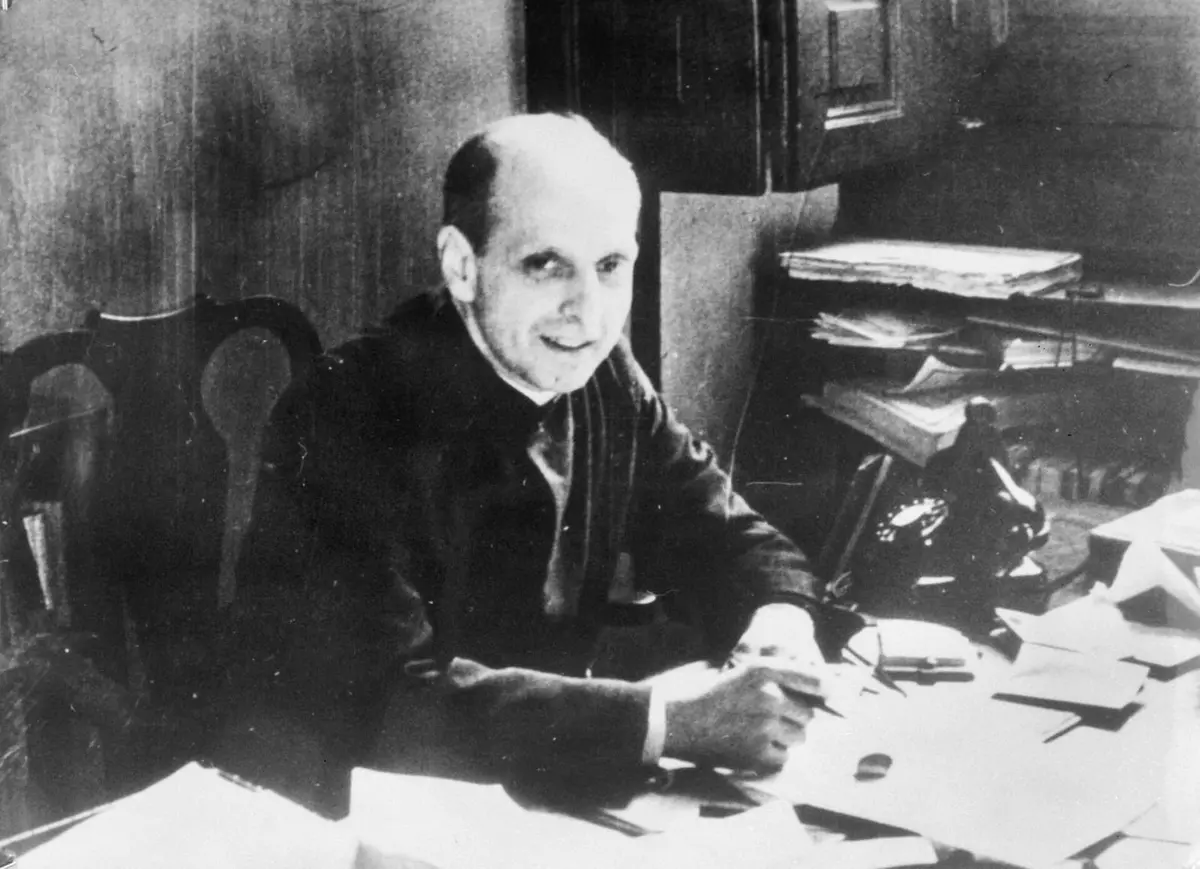
Pedro Arrupe (1907–1991) was born in Bilbao, studied medicine, and entered the Jesuits in 1927. Sent to Japan in 1938, he was briefly imprisoned in 1941 and was novice master near Hiroshima when the atomic bomb fell in 1945, turning the novitiate into a hospital. Elected the 28th Superior General in 1965, he led the Society through the renewal after Vatican II, promoted the service of faith and the promotion of justice, and founded the Jesuit Refugee Service in 1980. A stroke in 1981 left him unable to govern; he died in 1991. His cause for beatification opened in 2019.
Key takeaways
- Arrupe was born in Bilbao, Spain, in 1907 and studied medicine before becoming a Jesuit.
- He was a missionary in Japan from 1938 and survived the Hiroshima bomb in 1945.
- He was Superior General of the Jesuits from 1965 to 1983.
- He founded the Jesuit Refugee Service in 1980 and spoke of "men and women for others."
- His cause for beatification was opened in Rome in 2019.
Few Jesuits of the last century were loved as much, or debated as much, as Fr. Pedro Arrupe. A medical student who became a missionary, a survivor of Hiroshima who became Superior General, he led the Society of Jesus through the turbulent years after the Second Vatican Council and left a lasting mark on how Jesuits understand their mission.
From Bilbao to the Jesuits
Pedro Arrupe was born in Bilbao, in the Basque Country of Spain, on November 14, 1907. He studied medicine in Madrid with distinction. A visit to Lourdes, where he witnessed a sudden healing of a young man during the procession of the Blessed Sacrament, moved him deeply. In 1927 he left medicine and entered the Society of Jesus.
When the Spanish Republic expelled the Jesuits in 1932, he continued his studies in Belgium, the Netherlands and the United States. He was ordained in 1936.
Missionary in Japan
Arrupe had long dreamed of Japan, the land of St. Francis Xavier. He arrived in 1938, learned the language and culture, and worked as a pastor. After Pearl Harbor in December 1941 he was arrested on suspicion of spying and held in solitary confinement for 33 days. He later said that the experience taught him more than any book. On Christmas night, he heard Christians singing carols outside his cell.
Hiroshima
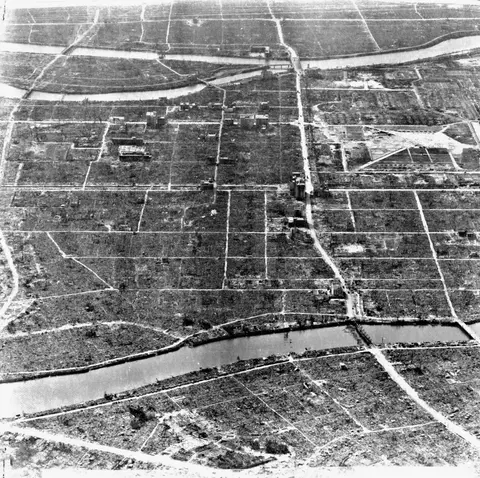
In 1945 he was novice master at Nagatsuka, on the outskirts of Hiroshima. When the atomic bomb exploded on August 6, the novitiate survived. Arrupe, with his medical training, turned it into a field hospital for about 150 wounded, with almost no supplies. Read the full story: The Jesuits of Hiroshima.
He became superior of the Jesuits in Japan and, in 1958, their first provincial.
Superior General (1965–1983)
On May 22, 1965, the 31st General Congregation elected Arrupe the 28th Superior General. He led the Society through the renewal called for by Vatican II: updating formation, encouraging inculturation and the Spiritual Exercises, and calling Jesuits to serve the poor. Key moments included:
- “Men for Others” (1973). Speaking to Jesuit alumni in Valencia, he said the goal of Jesuit education was to form men and women for others. The phrase became a motto for generations.
- The 32nd General Congregation (1974–75) defined the Jesuit mission as “the service of faith, of which the promotion of justice is an absolute requirement.”
- The Jesuit Refugee Service (1980). Moved by the Vietnamese boat people, he founded JRS.
His emphasis on justice inspired many and worried some, and his years in office included tensions with the Vatican, which he faced with obedience and serenity.
Illness and Death
On August 7, 1981, returning from Asia, Arrupe suffered a severe stroke that left him unable to govern. Pope John Paul II appointed a personal delegate to lead the Society until the 33rd General Congregation accepted Arrupe’s resignation in 1983 and elected Fr. Peter-Hans Kolvenbach. In a message read at that congregation, Arrupe wrote that he now felt more than ever in the hands of God. He died in Rome on February 5, 1991, and is buried in the Church of the Gesù.
Cause for Beatification
On February 5, 2019, the Diocese of Rome opened his cause for beatification. Pope Francis, himself a Jesuit formed during Arrupe’s generalate, has often spoken of him as a prophet and a man of prayer.
Prayer for the Beatification of Fr. Arrupe (Original Prayer)
Lord Jesus, You filled Your servant Pedro Arrupe with love for You and for the poor, courage in suffering and trust in Your will. Help us, like him, to find You in all things, to serve refugees and all in need, and to be men and women for others. If it be Your will, glorify him in Your Church. Amen.
Continue Reading
Read about the Jesuits of Hiroshima, the Jesuit Refugee Service, or the list of Jesuit Superior Generals.
Frequently asked questions
What is Pedro Arrupe known for?
For his care of the wounded at Hiroshima, his leadership of the Jesuits after Vatican II, his emphasis on faith that does justice, the phrase "men and women for others" and the founding of the Jesuit Refugee Service.
Is Pedro Arrupe a saint?
Not yet. The Diocese of Rome opened his cause for beatification on February 5, 2019, the anniversary of his death, so he is called Servant of God.
Did Pedro Arrupe write the prayer "Fall in Love"?
The well-known prayer beginning "Nothing is more practical than finding God" is often attributed to him, but it is now generally credited to another Jesuit, Fr. Joseph Whelan, though it expresses Arrupe's spirit well.
Sources
- Pedro Arrupe, SJ, One Jesuit's Spiritual Journey (autobiographical interviews, 1986)
- Pedro Arrupe, SJ, "Men for Others," address in Valencia (1973)
- Gianni La Bella, ed., Pedro Arrupe, Superior General of the Society of Jesus (Institute of Jesuit Sources, 2007)
- Company magazine coverage of Fr. Arrupe and the general congregations (1995–2008)