The African Jesuit AIDS Network: The Church's Response to HIV in Africa
Quick answer
By the early 2000s, Africa carried about 70 percent of the world's people living with HIV and AIDS. In 2002 the Jesuit provincials of Africa and Madagascar founded the African Jesuit AIDS Network (AJAN), based in Nairobi, to link Jesuits working in AIDS ministries in some 27 countries. Its first coordinator was the Canadian Jesuit Michael Czerny, later a cardinal. AJAN supports home-based care, education and prevention, care for orphans and the fight against stigma, and treats AIDS not only as a medical problem but as one tied to poverty, injustice and culture.
Key takeaways
- AJAN was founded in 2002 and is based in Nairobi, Kenya.
- It connects Jesuit AIDS ministries in more than 25 African countries.
- Its first coordinator was Fr. Michael Czerny, SJ, created a cardinal in 2019.
- It supports home-based care, prevention education, orphans and the fight against stigma.
- The Church is one of the largest providers of care for people with HIV in Africa.
“The next time you come, bring presents, and please pray that when you return, I’m still alive.” An African woman with AIDS said these words to Fr. Michael Czerny, SJ, during his visit to a Jesuit health center in a slum, with what he called mingled humor, hope and sadness. He had countless stories like hers. As coordinator of the African Jesuit AIDS Network (AJAN), he traveled the continent visiting Jesuits who worked with people living with HIV.
A Plague of Our Time
In 2002, Company magazine reported, about 70 percent of the world’s people with AIDS lived in Africa, and the continent suffered some 2.4 million AIDS-related deaths in a single year. Life expectancy in some countries fell below forty. A Jesuit hospital chaplain in Lusaka, Zambia, wrote of driving down a short street and passing two funerals.
“The AIDS crisis is not just medical,” Czerny said. “It is radically linked with poverty, injustice, inequalities, ignorance, migration and culture. HIV/AIDS drains African countries of their most precious resource: their people.”
The Founding of AJAN
In 2002 the Jesuit provincials of Africa and Madagascar created AJAN, based in Nairobi, Kenya. Its task was to link Jesuits in some 27 African countries working in a patchwork of AIDS ministries, so that they could learn from one another and speak with one voice. Its first coordinator was Fr. Czerny, a Canadian Jesuit born in Czechoslovakia.
What the Jesuits Do
Across Africa, Jesuit parishes, schools and centers have:
- Organized home-based care, training volunteers to visit, feed and pray with the sick, as at Kangemi Parish in Nairobi.
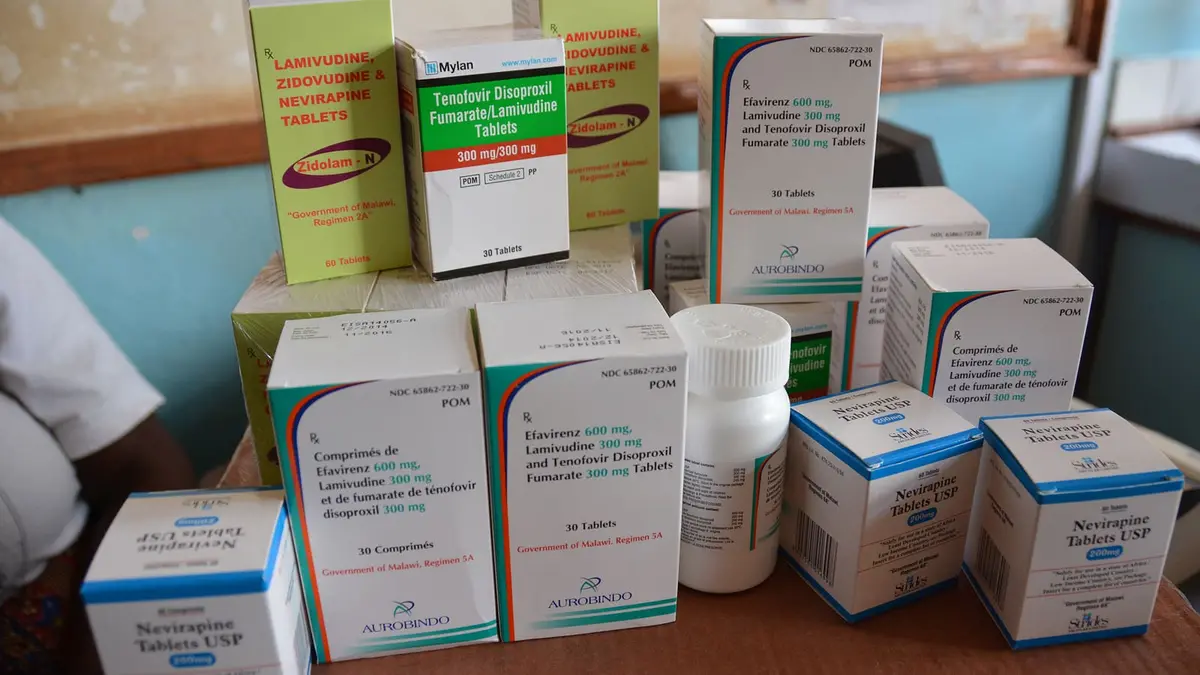
- Run health centers and supported access to antiretroviral medicines.
- Cared for orphans and children who lost parents to AIDS.
- Taught prevention grounded in Catholic teaching on chastity, fidelity and the dignity of the person, through programs for schools and youth.
- Fought stigma, so that people would seek testing and treatment instead of hiding in shame.
Cardinal Czerny
After leading AJAN until 2010, Michael Czerny served in the Vatican, working on migration and integral human development. Pope Francis created him a cardinal in 2019 and named him prefect of the Dicastery for Promoting Integral Human Development in 2022.
Christ Among the Sick
The Church is one of the largest providers of care for people with HIV and AIDS in the world. Its ministry continues Christ’s own compassion for the sick, which the Catechism calls a sign “that God has visited his people” (CCC 1503). In every person suffering from AIDS, the Jesuits of Africa see the face of the suffering Christ.
Prayer for People Living with HIV and AIDS (Original Prayer)
Lord Jesus, You touched the lepers and healed the sick. Be close to all who live with HIV and AIDS, to their families and to children left orphaned. Free them from fear and shame, give wisdom to doctors and researchers, and strength to all who care for them. Amen.
Continue Reading
Read about the Jesuit Refugee Service, St. Aloysius Gonzaga, the young Jesuit who died caring for plague victims, or Banteay Prieb in Cambodia.
Frequently asked questions
What does AJAN do?
It coordinates and supports Jesuit parishes, schools, health centers and social ministries working with people affected by HIV and AIDS, offers training and materials for prevention and pastoral care, and speaks for those affected in church and public forums.
Who is Michael Czerny?
A Czech-born Canadian Jesuit who coordinated AJAN from 2002 to 2010, later served in the Vatican's office for migrants and refugees, was created a cardinal by Pope Francis in 2019 and became prefect of the Dicastery for Promoting Integral Human Development.
Sources
- Danielle Vella, "The Faces of AIDS in Africa," Company magazine (Fall 2003)
- African Jesuit AIDS Network, mission statement
- Catechism of the Catholic Church, nos. 1503–1505, 2288