Christ in the Desert: Aboriginal Christian Art and the Jesuits of Balgo
Quick answer
Balgo, or Wirramanu, is an Aboriginal community in the Great Sandy Desert of Western Australia, home to the Kutjungka Catholic parish. Catholic missionaries have been present since the 1930s, though the first baptisms came only decades later out of respect for Aboriginal traditions. Australian Jesuits served the parish, traveling to remote communities. The church holds striking paintings in the Balgo style of Western Desert art, depicting Pentecost, the apostles and other Christian mysteries with the dots, circles and arcs of Aboriginal design.
Key takeaways
- Balgo (Wirramanu) is a remote Aboriginal community in Western Australia.
- Catholic missionaries have served there since the 1930s.
- Australian Jesuits ministered in the Kutjungka parish and surrounding communities.
- The church holds paintings that blend Aboriginal Western Desert design with Christian themes.
- The work reflects the Church's call to inculturation, respecting what is good in every culture.
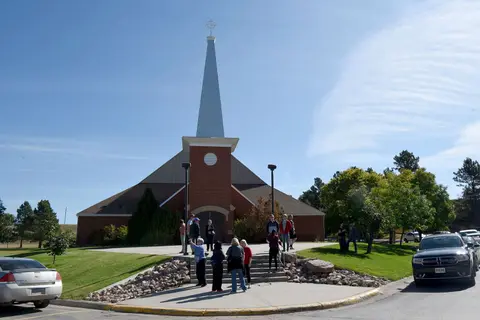
Halfway between the red rock of Uluru and the coastal town of Broome lies one of the most remote parishes in the Catholic world. Balgo, called Wirramanu by its people, is a settlement of a few hundred Aboriginal Australians in the Great Sandy Desert of Western Australia. Its church, built of the red and ochre stone of the land, holds a treasure: paintings in which the ancient designs of the desert proclaim the Gospel. Company magazine called the story “Christ in the Desert.”
A Parish in the Outback
The Kutjungka parish serves Balgo and other small communities scattered across hundreds of kilometers of desert. Catholic missionaries have been present in the region since the 1930s. Because the Aboriginal people had a strong and well-developed spiritual life of their own, the missionaries moved slowly, and the first baptisms came only decades later. Today most people of the area feel a connection with the parish, and many consider themselves Catholic.
In the 1990s two Australian Jesuit priests served the parish. They traveled to communities for Mass and catechesis, worked with an active parish council, and found themselves acting as family counselors, mediators and, now and then, drivers.
The Land and the Spirit
Traditional Aboriginal spirituality is grounded in a deep relationship between the land and its people. Stories of the Dreaming tell of ancestral beings who walked the land at creation. Over the years in Balgo, gestures, dances and oral traditions have been woven into the Church’s signs and sacraments. At baptisms, for example, the ancient Christian symbol of water is joined by smoke, a traditional sign of purification.
The Art of Balgo
Aboriginal painting was originally made on bodies, shields and the ground for ceremonies and then erased. With the introduction of canvas and acrylic paint in the late 1970s and 1980s, artists in Balgo developed a distinctive style of Western Desert art, bold in color, built of dots, circles, arcs and lines.
Some of these artists painted for their church. Company described several works:
- A banner combining Christian symbols with Aboriginal design.
- A Pentecost, in which twelve tongues of fire hover above crescent shapes, the traditional symbol for people seated in a circle, representing the apostles gathered with Mary.
- Paintings in which the Stations of the Cross and other Gospel scenes are told in the visual language of the desert.
A Long Jesuit Tradition
The Jesuits have long encouraged local artists to take Christian imagery and make it their own, in India, Japan, the Philippines, Mexico and the reductions of South America. Balgo is a modern chapter of that story.
The Church and Inculturation
The Second Vatican Council taught that the young Churches should take “from the customs and traditions of their people, from their wisdom and their learning, from their arts and disciplines,” everything that can glorify God (Ad Gentes 22). At Alice Springs in 1986, Pope St. John Paul II told Aboriginal and Torres Strait Islander people that their culture, purified and enriched by the Gospel, has a place in the Church, and that the Church in Australia would not be fully what Jesus wants until they had made their contribution to her life.
Prayer for Indigenous Peoples (Original Prayer)
Creator God, You made the land and all who live on it. You were present to the first peoples of this earth long before missionaries came. Bless the Aboriginal and Torres Strait Islander peoples, heal the wounds of injustice, and let their wisdom and their art praise Your Son, our Lord Jesus Christ. Amen.
Continue Reading
Read about Jesuit mission art, the Jesuit missions of Chiquitos, or who the Jesuits are.
Frequently asked questions
What is Balgo art?
A style of Western Desert Aboriginal painting that developed in the Balgo community from the 1980s, using bold color, dots, circles and arcs. Some Balgo artists paint Christian subjects in this style, especially for the local church.
Does the Catholic Church allow Aboriginal symbols in worship?
Yes, when they are compatible with the faith. Pope St. John Paul II, speaking to Aboriginal and Torres Strait Islander people at Alice Springs in 1986, said the Church in Australia would not be fully the Church Jesus wants until they had made their contribution to its life.
Sources
- "Christ in the Desert," Company magazine (Summer 1997)
- Pope St. John Paul II, Address to the Aborigines and Torres Strait Islanders, Alice Springs (November 29, 1986)
- Second Vatican Council, Ad Gentes (1965), no. 22