The Jesuits and the Lakota: St. Francis Mission, Red Cloud and Black Elk
Quick answer
At the invitation of Lakota leaders, German Jesuits and Franciscan sisters founded St. Francis Mission on the Rosebud Reservation in 1886 and Holy Rosary Mission on Pine Ridge in 1888, the latter at the request of Chief Red Cloud. The missions ran schools, parishes and catechist programs for more than a century. Their history includes both deep faith and painful wrongs of the boarding-school era. The Lakota holy man Nicholas Black Elk became a Catholic catechist at Holy Rosary, and his cause for canonization opened in 2017. Today Lakota deacons such as Ben Black Bear preach and translate the Gospel into Lakota.
Key takeaways
- St. Francis Mission was founded in 1886 on the Rosebud Reservation.
- Holy Rosary Mission, now Red Cloud Indian School, was founded in 1888 at Chief Red Cloud's request.
- Nicholas Black Elk served as a Catholic catechist for decades; his cause for sainthood is open.
- Lakota deacons lead parishes and translate Scripture into Lakota.
- The missions also face the painful legacy of the boarding-school era.
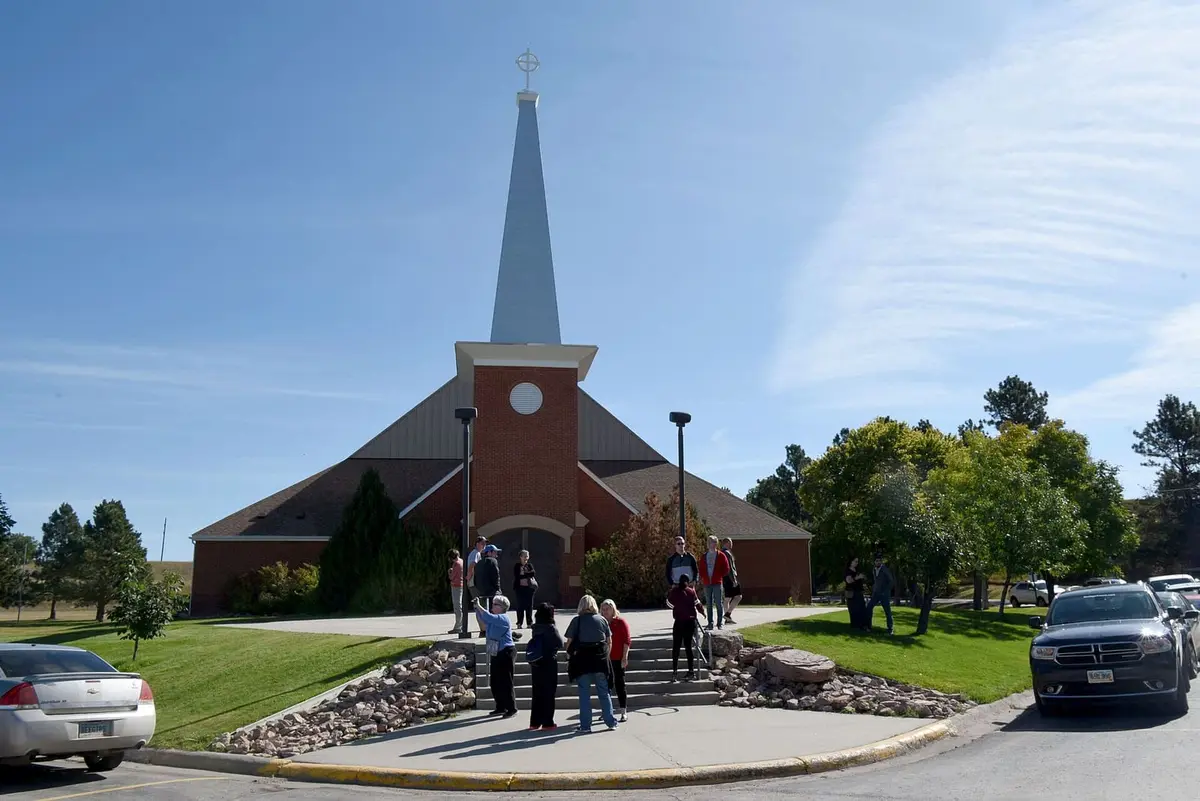
On Sunday mornings at St. Charles Church in St. Francis, South Dakota, a Lakota deacon named Ben Black Bear often preached in Lakota, his first language. In Company magazine he described the challenge of translating the Gospel of Luke into a language with no word for “kingdom.” The closest he could find was an old Lakota word carrying the sense of agreement and promise. His work is part of a long story of faith among the Lakota people and the Jesuits who came to serve them.
The Missions Begin
In the 1880s, Lakota leaders asked for “Black Robes” to teach their children. Jesuits of German origin from the Buffalo Mission, together with the Sisters of St. Francis of Penance and Christian Charity, answered the call.
- St. Francis Mission was founded in 1886 on the Rosebud Reservation, home of the Sicangu Lakota. It came to include the St. Francis Indian School, parishes across the reservation and later the Sicangu Lakota language program.
- Holy Rosary Mission was founded in 1888 on the Pine Ridge Reservation at the request of the great Oglala chief Red Cloud. It is known today as Red Cloud Indian School.
The Jesuits learned the Lakota language, printed prayer books and hymnals in it, and trained Lakota catechists to lead prayer in distant communities.
Nicholas Black Elk
The most famous Lakota Catholic is Nicholas Black Elk (about 1863–1950), an Oglala holy man who fought as a boy at the Little Bighorn and survived the massacre at Wounded Knee in 1890. In 1904, after meeting Jesuit Fr. Joseph Lindebner at the bedside of a sick child he was treating, he asked for baptism and took the name Nicholas.
For nearly fifty years he served as a catechist at Holy Rosary, traveling to other reservations and tribes, teaching prayers and Scripture and bringing hundreds to the faith. He used a visual catechism called the “Two Roads” to explain salvation history. The Diocese of Rapid City opened his cause for canonization in 2017.
Lakota Deacons and Leaders
Since the 1970s, Lakota men have been ordained permanent deacons, serving parishes, preaching, baptizing and burying the dead. Ben Black Bear, who learned Latin from Jesuit Fr. Bernard Fagan at the St. Francis Mission School, served as a deacon, teacher and tribal official, and translated Scripture passages into Lakota for his homilies.
Wounds and Healing
The history of the missions is not only one of faith. Like many boarding schools of the era, mission schools at times suppressed the Lakota language and culture, and some children suffered harm. In recent years the Jesuits and the missions have acknowledged these wrongs, opened their records and worked with Lakota leaders toward healing. The schools now teach the Lakota language and culture as part of their mission.
A Living Faith
The Catechism teaches that the Gospel must take root in every culture, purifying and fulfilling what is good in it (CCC 854). The Lakota Catholics of Rosebud and Pine Ridge show what that looks like: Mass with drum and star quilt, prayers in Lakota, and faith handed on by their own elders and deacons.
Prayer for the Lakota People (Original Prayer)
Lord God, Creator and Father of all peoples, we thank You for the faith of the Lakota and for the witness of Your servant Nicholas Black Elk. Heal the wounds of the past, bless Lakota families, elders and young people, and keep Your Church strong on the prairie. Amen.
Continue Reading
Read about Jesuit missions in the American West, the Catholic Church among the Yup’ik of Alaska, or St. Isaac Jogues and the early Jesuit missions in North America.
Frequently asked questions
Who was Nicholas Black Elk?
An Oglala Lakota holy man (about 1863–1950) who survived the Battle of Little Bighorn and the Wounded Knee massacre, became a Catholic in 1904 and worked as a catechist for nearly fifty years. The Diocese of Rapid City opened his cause for canonization in 2017, and he is called Servant of God.
What is Red Cloud Indian School?
A Jesuit-founded Catholic school on the Pine Ridge Reservation, originally Holy Rosary Mission (1888), now run with Lakota leadership and known for its academic program and Lakota language and culture curriculum.
Sources
- Ben Black Bear, "Filled with the Holy Spirit," Company magazine (Fall 1996)
- Michael F. Steltenkamp, Nicholas Black Elk, Medicine Man, Missionary, Mystic (University of Oklahoma Press, 2009)
- Diocese of Rapid City, Cause for Canonization of Nicholas Black Elk