Who Are the Jesuits? The Society of Jesus Explained
Quick answer
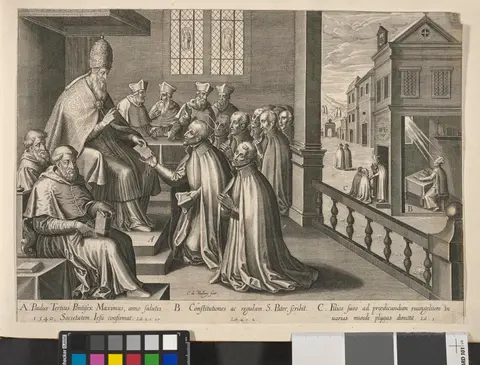
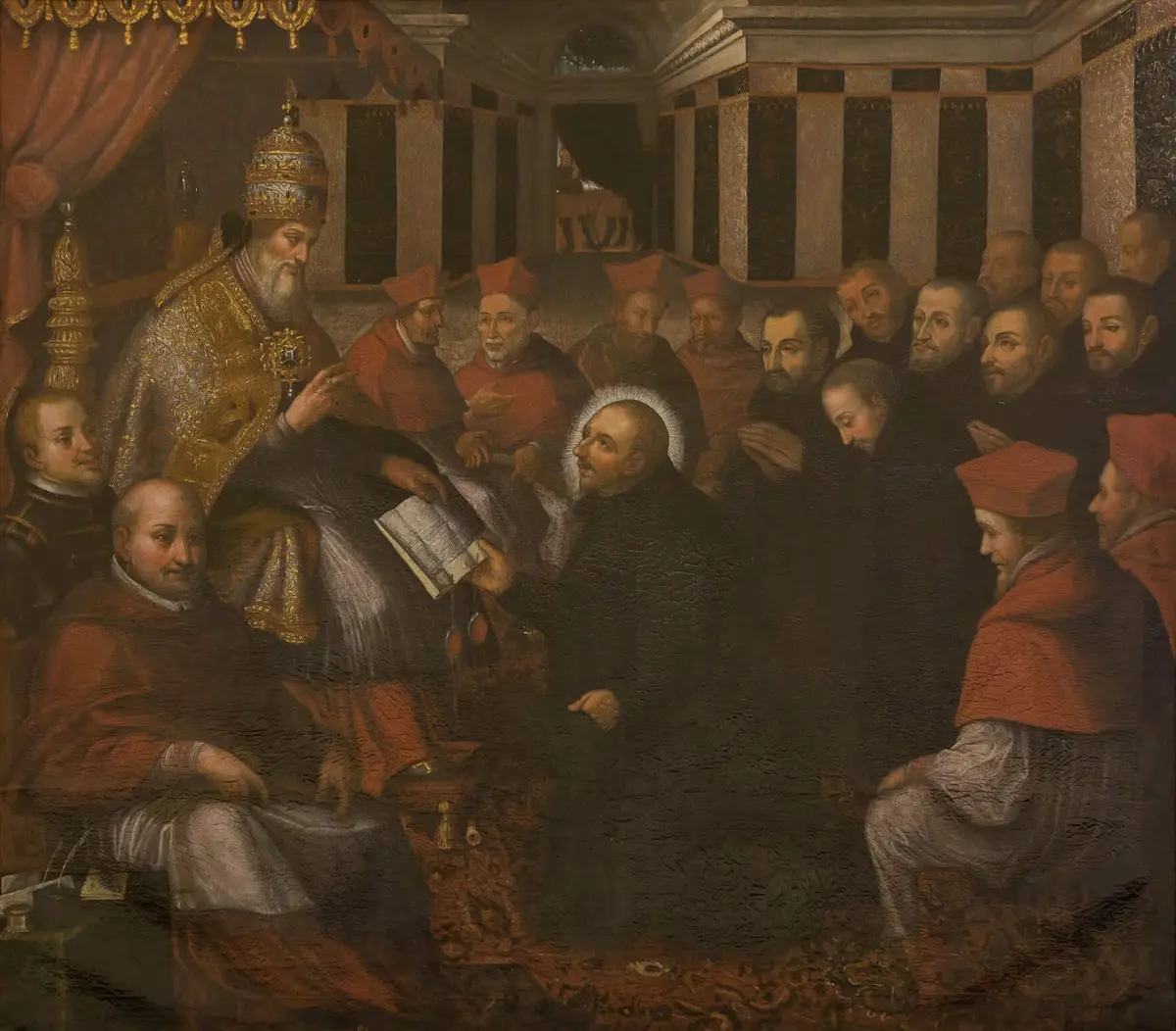
The Jesuits are members of the Society of Jesus, a Catholic religious order of priests and brothers founded by St. Ignatius of Loyola and approved by Pope Paul III in 1540. They take vows of poverty, chastity and obedience, and the solemnly professed add a special vow of obedience to the pope regarding missions. Their motto is "Ad maiorem Dei gloriam," for the greater glory of God. Jesuits are known for schools and universities, missions, retreats based on the Spiritual Exercises, scholarship and work for justice.
Key takeaways
- St. Ignatius of Loyola founded the Society of Jesus with six companions; Pope Paul III approved it in 1540.
- Jesuits are priests and brothers who follow the Spiritual Exercises and seek to "find God in all things."
- Their motto is Ad maiorem Dei gloriam (AMDG), "for the greater glory of God."
- The order was suppressed in 1773 and restored by Pope Pius VII in 1814.
- Pope Francis, elected in 2013, was the first Jesuit pope.
When people hear that a priest is “a Jesuit,” they often picture a teacher, a scholar or a missionary in some faraway land. All three images are true. The Society of Jesus, whose members are called Jesuits, has shaped Catholic life for nearly five centuries, from the first universities of Europe to the jungles of South America and the classrooms of America’s high schools.
The Founder: St. Ignatius of Loyola
The story begins with St. Ignatius of Loyola, a Basque soldier wounded by a cannonball at Pamplona in 1521. During a long recovery he read the life of Christ and the lives of the saints, and he noticed that dreams of worldly glory left him empty, while thoughts of following Jesus left him at peace. That discovery became the heart of his Spiritual Exercises.
At the University of Paris, Ignatius gathered six companions, among them St. Francis Xavier and St. Peter Faber. On August 15, 1534, they made vows together in a small chapel on Montmartre. In 1540, Pope Paul III approved their new order with the bull Regimini militantis Ecclesiae.
Why “Company”?
The first companions called themselves the Compañía de Jesús, the “Company of Jesus.” Some hear a military ring in the word, but its deeper meaning is companionship: friends in the Lord who share bread and a mission. For that reason the American Jesuits named their national magazine Company. From 1983 to 2010 it told the stories of Jesuits and their friends, and many of the articles in our Jesuits section carry on its memory.
What Jesuits Promise
Like other religious, Jesuits take vows of poverty, chastity and obedience. Fully professed Jesuits add a “fourth vow” of special obedience to the pope regarding missions: they promise to go wherever the Holy Father sends them for the good of souls.
Jesuits do not have a common choir office or a distinctive habit. Ignatius wanted his men free to move, to preach, to teach and to serve wherever the need was greatest.
The Jesuit Motto and Spirituality
The Jesuit motto is Ad maiorem Dei gloriam, “for the greater glory of God,” often written AMDG at the top of school papers. Several key ideas run through Ignatian spirituality:
- Finding God in all things: God can be met in work, study, friendship and nature, not only in church.
- The Magis: always seeking the “more,” the greater good, out of love.
- Discernment: paying attention to the movements of the heart to know God’s will.
- The Examen: a short daily prayer reviewing the day with gratitude.
- Cura personalis: care for the whole person, body, mind and soul.
What Jesuits Do
From the start, Jesuits were sent “to the frontiers.” Their works today include:
- Education. The Society runs thousands of schools and universities worldwide. In the United States there are 27 Jesuit colleges and universities, such as Georgetown, Boston College and Fordham, plus dozens of high schools. See Jesuit education.
- Missions. Jesuits carried the Gospel to India, Japan, China, the Americas and Africa, often at the cost of their lives. Read about the Jesuit martyrs of the 20th century.
- Retreats. Retreat houses offer the Spiritual Exercises to lay people, priests and religious.
- Parishes and social ministries, including the Jesuit Refugee Service, founded in 1980.
- Scholarship and science. Jesuit astronomers helped create the Gregorian calendar, and Jesuits still run the Vatican Observatory.
Suppression and Restoration
The Jesuits’ influence also made enemies. Under pressure from the Catholic courts of Portugal, France and Spain, Pope Clement XIV suppressed the Society in 1773. Jesuits survived in Russia, where Empress Catherine the Great refused to publish the papal decree. Pope Pius VII restored the Society worldwide in 1814.
Jesuits in America
Jesuits came to Maryland with the first English Catholic settlers in 1634, and French Jesuits such as St. Isaac Jogues gave their lives among the native peoples of North America. Read the full story of the Jesuits in the United States.
Jesuit Saints
The Society has given the Church many saints, among them Ignatius, Francis Xavier, Aloysius Gonzaga, Robert Bellarmine, Peter Canisius, Peter Claver and Isaac Jogues, along with martyrs like Blessed Miguel Pro. See our list of Jesuit saints and blesseds.
Who Leads the Jesuits?
The Society is governed by a Superior General elected for life by a General Congregation, though recent generals have been allowed to resign. He lives in Rome, near the Church of the Gesù. See the full list of Jesuit superiors general.
The Suscipe of St. Ignatius
Take, Lord, and receive all my liberty, my memory, my understanding, and my entire will, all I have and call my own. You have given all to me. To you, Lord, I return it. Everything is yours; do with it what you will. Give me only your love and your grace. That is enough for me. Amen.
Continue Reading
Start with the life of St. Ignatius of Loyola, learn to pray the Ignatian way, or browse all our articles on the Jesuits.
Frequently asked questions
What does SJ mean after a priest's name?
SJ stands for Societas Iesu, Latin for "Society of Jesus." A priest or brother who signs "Fr. John Smith, SJ" is a member of the Jesuit order.
Why are Jesuits called "the Company"?
Ignatius and his first companions called their group the "Compañía de Jesús," the Company of Jesus. The Spanish word suggests companions who share a journey, which is why the American Jesuits named their magazine Company.
Are Jesuits priests?
Most are priests, but the Society also has brothers, who take the same vows but are not ordained. Both are full members of the order.
How many Jesuits are there today?
Over 13,000 Jesuits serve in more than 100 countries, making the Society the largest male religious order in the Church, though numbers have fallen from a peak of about 36,000 in the 1960s.
Sources
- Formula of the Institute of the Society of Jesus (1540, 1550)
- John W. O'Malley, SJ, The First Jesuits (Harvard University Press, 1993)
- Society of Jesus, General Curia, About Us
- Catechism of the Catholic Church, nos. 914–933 (consecrated life)