The Desert Fathers: Who They Were, Their Sayings and What They Teach Us
Quick answer
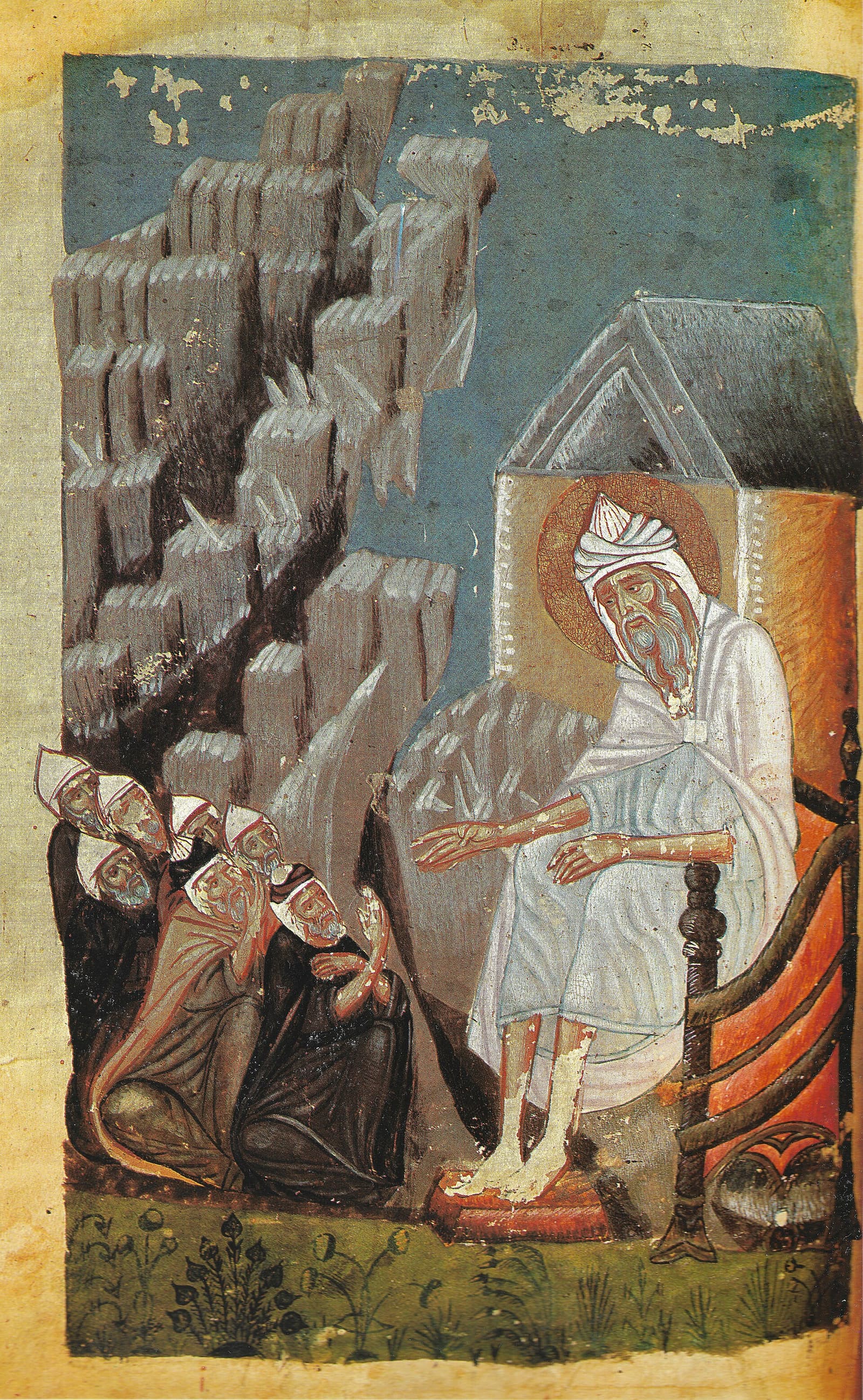
The Desert Fathers and Mothers were Christian men and women who, from the third century on, left ordinary life to pray and do penance in the deserts of Egypt, Palestine and Syria. Led by figures such as St. Anthony the Great and St. Pachomius, they laid the foundations of Christian monasticism. Their wisdom survives in collections of their sayings and in the writings of St. John Cassian.
Key takeaways
- The movement grew in the third and fourth centuries in Egypt, and spread to Palestine and Syria.
- St. Anthony the Great (around 251–356) became its best-known figure through the biography written by St. Athanasius.
- St. Pachomius organized the first large communities of monks living under a common rule.
- Women were part of the movement too, including Amma Syncletica and Amma Sarah.
- Their teaching on humility, watchfulness and not judging others remains practical for lay people today.
In the third and fourth centuries, thousands of Christians did something that puzzled their neighbors. They walked away from their farms, families and city life, and went to live in one of the harshest places on earth, to pray.
We call them the Desert Fathers and Mothers. Sixteen centuries later, their short and often surprising sayings can still strike home.
Why Did They Go to the Desert?
For the first centuries of Christianity, the martyrs were the Church’s great heroes. When persecution ended under Constantine in the early fourth century, being a Christian became safe and even fashionable. Many believers felt a need to give themselves wholly to God in another way.
The desert was also, in Scripture, a place of testing and of meeting God. Israel wandered there for forty years. Elijah and John the Baptist lived there. Jesus Himself went into the wilderness to fast and be tempted (Matthew 4:1-11).
The Great Figures
St. Anthony the Great
Anthony was a young Egyptian farmer who heard the Gospel words “go, sell what thou hast, and give to the poor” (Matthew 19:21) and took them literally. He gave up his inheritance and went further and further into the desert, where he struggled against temptation for decades. He died around 356, aged about 105. St. Athanasius’s Life of St. Anthony became one of the most influential books of the early Church, and it played a part in St. Augustine’s conversion. His feast is January 17.
St. Paul of Thebes
According to St. Jerome, Paul fled to the desert during persecution and lived alone for decades. His meeting with the aged Anthony is one of the most tender stories of early monastic literature.
St. Pachomius
Around the year 320, this former soldier founded a community at Tabennisi in Upper Egypt. His was a new idea: monks living together under one rule, sharing work and prayer. This form of life, known as cenobitic monasticism, is the root of most later religious communities.
St. Macarius the Great
Macarius settled in the desert of Scetis, which became a major center of monastic life. He was known for his gentleness.
Abba Moses the Black
Moses is said to have been a robber before his conversion. In a famous story, the brothers called him to a meeting to judge a monk who had sinned. He arrived carrying a leaking jug of water on his back. Asked why, he said his own sins were running out behind him where he could not see them, and yet he was being asked to judge someone else. The brothers forgave the monk.
The Desert Mothers
Women took up this life too. Amma Syncletica and Amma Sarah were respected for their wisdom, and their sayings appear alongside those of the men.
Where Their Wisdom Is Preserved
- The Sayings of the Fathers (Apophthegmata Patrum), short stories and words of advice collected over generations.
- The Life of St. Anthony by St. Athanasius.
- The Lausiac History of Palladius, an account of the monks he knew.
- The Institutes and Conferences of St. John Cassian, who visited the desert around the year 400 and brought its teaching to the West. St. Benedict told his monks to read Cassian (Rule of St. Benedict 42 and 73), and through the Benedictine tradition, the desert shaped all of Western monastic life.
What They Teach Us
The Desert Fathers often come across as extreme, and their fasting and solitude are not meant to be copied by people without proper guidance. Yet their deepest lessons fit any Christian life.
- Do not judge. This is perhaps their most repeated teaching. The story of the leaking jug says it all.
- Stay where you are. An elder told a restless monk to sit in his cell, because his cell would teach him everything. Holiness is found in faithfully doing the duty in front of you.
- Watch your thoughts. They were keen observers of how temptations start: with a passing thought, which, if entertained, grows. Their analysis of the chief evil thoughts helped shape the later teaching on the capital sins.
- Love your neighbor. St. Anthony taught that our life and our death are bound up with our neighbor. To win a brother is to win God.
- Begin again. A brother once asked what monks do all day. The answer given was: we fall down and get up, fall down and get up again.
Living the Desert at Home
You do not need a cave. You could try the following:
- Set aside ten minutes of silence every day, perhaps in a home prayer corner.
- Repeat a short prayer from Scripture throughout the day, such as “O God, come to my assistance; O Lord, make haste to help me” (Psalm 69:2, Douay-Rheims). Cassian especially recommended it.
- Fast from something small on Fridays.
- Stop yourself the next time you begin to criticize someone, and pray for that person instead.
A Prayer of the Desert Heart (Original Prayer)
Lord Jesus, You went into the desert for me. Lead me to quiet, away from noise and hurry. Teach me to watch my thoughts and guard my tongue. Keep me from judging my neighbor. And when I fall, help me to rise and begin again. Amen.
Continue Reading
Learn more about how to live like a Catholic saint, or read about St. Augustine of Hippo, whose conversion was moved in part by the story of St. Anthony.
Frequently asked questions
Who are the Desert Fathers?
They were early Christian hermits and monks who lived mainly in the Egyptian desert from about the third to the fifth century. They sought God through prayer, fasting, work and solitude.
Who was the first Desert Father?
St. Jerome wrote that St. Paul of Thebes was the first Christian hermit. St. Anthony of Egypt, however, is usually called the father of monasticism, because his example and his biography inspired thousands of others.
Where can I read the sayings of the Desert Fathers?
The sayings were gathered in collections known as the Apophthegmata Patrum, or Sayings of the Fathers. Several English translations are in print. The Life of Anthony by St. Athanasius and the Conferences of St. John Cassian are also very good places to begin.
Were there Desert Mothers?
Yes. Women also went to the desert and were called "Amma," or Mother. Sayings of Ammas Syncletica, Sarah and Theodora have come down to us.
Sources
- St. Athanasius, Life of St. Anthony
- St. John Cassian, Institutes and Conferences
- Sayings of the Desert Fathers (Apophthegmata Patrum)
- Palladius, The Lausiac History
- The Rule of St. Benedict, chapters 42 and 73