St. John Cassian: His Life, Conferences and Institutes Explained
Quick answer
St. John Cassian (around 360–435) was a monk who spent years among the Desert Fathers of Egypt and later founded monasteries near Marseilles. His Institutes and Conferences carried the wisdom of the desert to the West and strongly shaped the Rule of St. Benedict. He is known for recommending constant prayer with a single verse of the Psalms.
Key takeaways
- Cassian and his friend Germanus lived in a monastery in Bethlehem and then spent years with monks in Egypt.
- He settled near Marseilles around 415 and founded monasteries for men and for women.
- The Institutes teaches the outward rule of monastic life and the eight chief vices, and the Conferences records the teaching of the desert elders.
- St. Benedict instructed his monks to read Cassian.
If you have ever heard the opening words of the Divine Office, “O God, come to my assistance,” you have been touched by a monk who crossed the Mediterranean to learn how to pray and then wrote it all down for the rest of us.
From Bethlehem to Egypt
John Cassian was born around 360, probably in Scythia Minor, in present-day Romania. As a young man he joined a monastery in Bethlehem with his close friend Germanus.
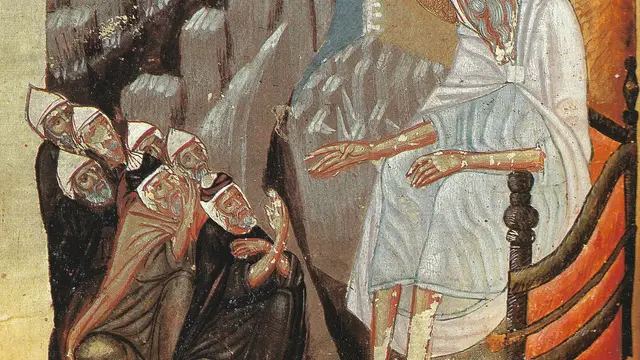
Around 385 the two traveled to Egypt, where they intended to stay only for a short time. They stayed for most of fifteen years, visiting the great elders of Scetis and the Thebaid, sitting at their feet and asking questions.
Constantinople, Rome and Marseilles
Around the year 400 he went to Constantinople, where St. John Chrysostom ordained him a deacon. When Chrysostom was unjustly exiled, Cassian carried an appeal on his behalf to the pope in Rome.
Around 415 he settled near Marseilles in Gaul. There he founded monasteries for men and for women. At the request of local bishops, he began writing down all that he had learned in the East. He died around 435.
The Institutes
The Institutes describes the outward life of the monk, including his clothing, his prayer and his work. It then analyzes eight principal vices: gluttony, lust, avarice, anger, dejection, spiritual weariness (acedia), vainglory and pride. This teaching, which he received from the desert tradition, helped to shape the later list of the seven capital sins.
The Conferences
The Conferences is a series of 24 dialogues in which Cassian and Germanus question the desert elders. Their lessons are still fresh:
- Our goal. The final end of the monk is the Kingdom of God, and the immediate goal is purity of heart (Conference 1).
- Discernment. Excess can harm us just as neglect does. Good counsel protects us from ourselves.
- Friendship. True friendship is built on shared virtue and on the love of God.
The Prayer of a Single Verse
In Conference 10, Abba Isaac teaches a simple way to pray without ceasing. Repeat this verse at all times, in joy, in temptation, on waking and on going to sleep:
O God, come to my assistance; O Lord, make haste to help me. (Psalm 69:2, Douay-Rheims)
The verse went on to open the hours of the Church’s daily prayer, and it is a model for the short prayers many Christians still use.
His Influence
St. Benedict told his monks to read the Conferences and the Institutes (Rule of St. Benedict 42 and 73). In this way the wisdom of Egypt became part of the heritage of Western Christianity.
One part of Cassian’s work caused controversy. In Conference 13 he seemed to some readers to give too much to human effort at the start of faith. The Second Council of Orange in 529 settled the question and taught that even the beginning of faith is a gift of grace.
A Prayer for Purity of Heart (Original Prayer)
Lord, make my heart pure, so that I may see You. Keep my mind from wandering. When I am tempted and when I am at peace, let my prayer always be: O God, come to my assistance; O Lord, make haste to help me. Amen.
Continue Reading
Read more about the Desert Fathers who taught him, and pray the St. Benedict prayer.
Frequently asked questions
What are the Conferences of John Cassian?
They are a set of 24 dialogues that Cassian wrote in Latin, presenting the teaching of the great Egyptian monks on prayer, purity of heart and the spiritual life.
Is John Cassian a saint?
He is venerated as a saint in the East and in some places in the West, including Marseilles, but he is not on the General Roman Calendar.
What was the semi-Pelagian controversy?
Conference 13 was criticized by followers of St. Augustine, who thought it gave too much credit to human effort. The Second Council of Orange in 529 later clarified that grace comes first in our turning to God.
Sources
- St. John Cassian, Institutes
- St. John Cassian, Conferences (especially Conferences 1, 9, 10 and 13)
- The Rule of St. Benedict, chapters 42 and 73
- Second Council of Orange (529)