Alfred Delp: The Jesuit Who Defied Hitler and Wrote of Advent in Chains
Quick answer
Alfred Delp (1907–1945) was a German Jesuit priest who joined the Kreisau Circle, a resistance group that planned a just, Christian Germany after Hitler. Arrested after the failed July 20, 1944, attempt on Hitler's life, he was tortured, tried before the People's Court and condemned for treason, though not for the plot itself. In prison, with his hands bound, he made his final vows as a Jesuit and wrote meditations on Advent that are still read today. He was hanged at Plötzensee prison in Berlin on February 2, 1945.
Key takeaways
- Delp was born in Mannheim in 1907, entered the Jesuits in 1926 and was ordained in 1937.
- He advised the Kreisau Circle on Catholic social teaching.
- After July 20, 1944, he was arrested, tortured and sentenced to death.
- He made his final Jesuit vows in prison on December 8, 1944.
- He was hanged in Berlin on February 2, 1945; his Advent writings are spiritual classics.
In a photograph from his trial in January 1945, Fr. Alfred Delp stands in a business suit, chin raised, fingertips pressed together as if making a careful argument. Behind him sits Count Helmuth von Moltke. Both would be executed. Company magazine described the picture in a 2003 article titled “With Bound Hands,” and the phrase fits his whole story: a priest in chains who became freer than his captors.
Early Life
Alfred Delp was born in Mannheim, Germany, in 1907 to a Catholic mother and a Protestant father. As a teenager he chose the Catholic faith, and in 1926 he entered the Society of Jesus. He studied philosophy and theology and became a writer on social questions. He was ordained a priest in Munich in 1937, as the Nazis were tightening their grip on the Church, closing Jesuit schools and harassing religious communities.
The Kreisau Circle
Delp’s provincial, Fr. Augustin Rösch, knew Helmuth James von Moltke, a Protestant nobleman convinced that Nazi victories would not last. Moltke’s group, later called the Kreisau Circle after his estate, was planning a Germany rebuilt on Christian and democratic principles after Hitler’s fall. They wanted advice from someone who knew the Church’s social teaching. Rösch sent Delp.
Delp attended the group’s secret meetings and helped draft ideas for a just social order, workers’ rights and the dignity of the person. Meanwhile, as pastor of a Munich parish, he helped Jews escape to Switzerland.
Arrest and Trial
On July 20, 1944, Colonel Claus von Stauffenberg’s bomb exploded in Hitler’s headquarters but failed to kill him. The Gestapo arrested thousands. Delp was taken on July 28 after Mass. He had visited Stauffenberg in June 1944, which made him a suspect.
He endured weeks of interrogation and beatings and was pressured to leave the Jesuits. He refused. In January 1945 he was tried before the notorious People’s Court under Roland Freisler. The court could not prove he knew of the plot. But it found him guilty of treason for meeting with others who imagined a Germany without Hitler, and Freisler poured contempt on him for being a Jesuit.
In a letter smuggled from prison, Delp wrote that his real offense was that he had believed in Germany and in its emergence from that dark hour.
Final Vows in Chains
On December 8, 1944, the feast of the Immaculate Conception, a fellow Jesuit was allowed into Delp’s cell. There, with his hands in chains, Delp pronounced his final vows in the Society of Jesus. It was the fulfillment of his life’s offering.
Advent in a Prison Cell
In the weeks before Christmas 1944, Delp wrote meditations on Advent on scraps of paper, smuggled out in his laundry. They are among the most powerful spiritual writings of the century. He described Advent as a time when people are shaken awake to their own poverty and to God’s coming. He wrote of the “annunciation angels” quietly at work in the darkness and urged readers not to lose hope.
Execution
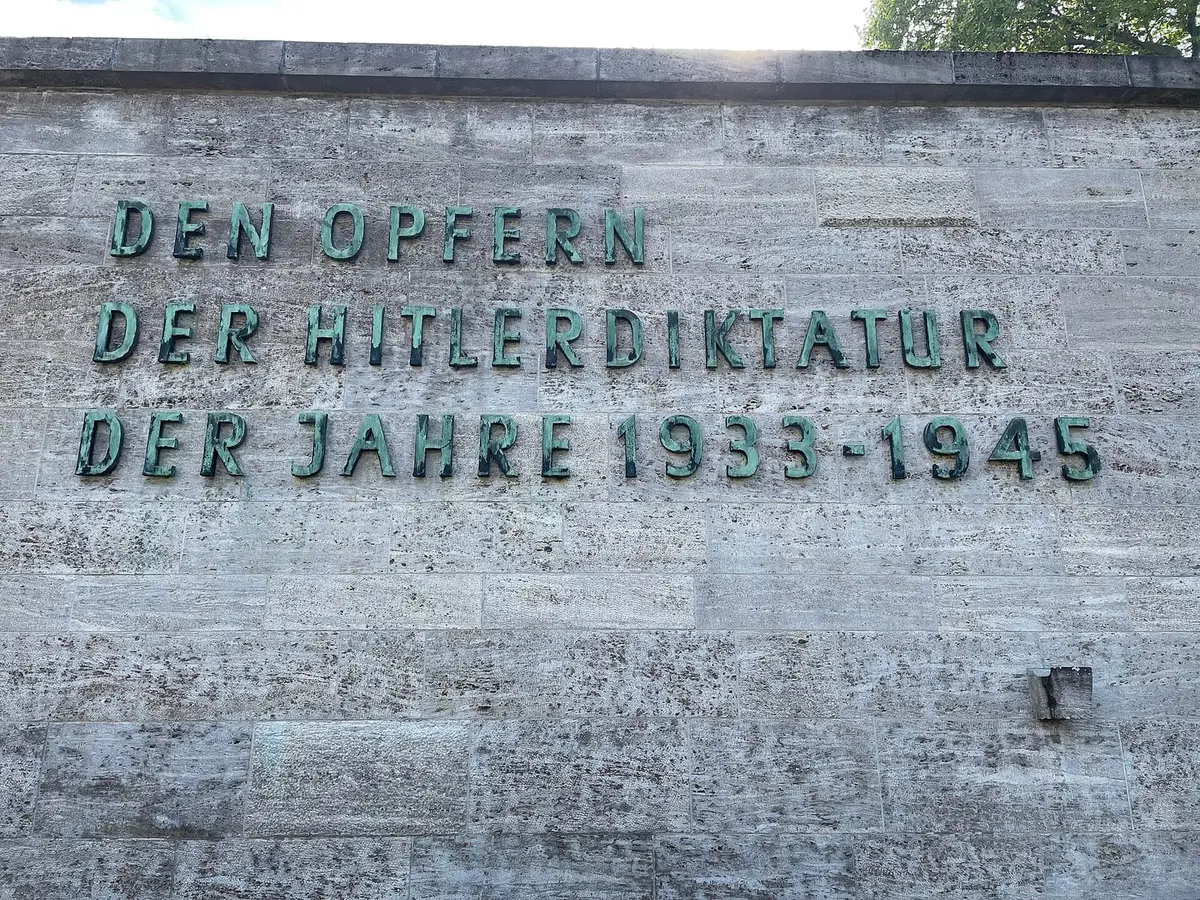
Delp was hanged at Plötzensee prison in Berlin on February 2, 1945, the feast of the Presentation of the Lord. He was 37. His ashes were scattered, so he has no grave. His last written words included gratitude and peace.
His Witness Today
Delp showed that faith is not a private matter. The Gospel has consequences for how societies are ordered, and a Christian must sometimes pay a price for the truth. He is honored among the Jesuit martyrs of the 20th century. His Advent writings, collected in Advent of the Heart, appear on our Jesuit reading list.
Advent Prayer (Original Prayer, inspired by Fr. Delp)
Lord Jesus, You come into our darkness. Shake us awake from our comfort and our fear. Give us courage to speak the truth, faith to wait for You in every night, and hope that does not fail. Come, Lord Jesus, and set us free. Amen.
Continue Reading
Read about the Jesuit martyrs of the 20th century, Blessed Miguel Pro, or who the Jesuits are.
Frequently asked questions
Why was Alfred Delp executed?
For "high treason." The court could not prove he knew of the bomb plot, but it condemned him for meeting with others who planned a Germany without Hitler and for being a Jesuit, whom the judge called an enemy of the Reich.
What are Delp's Advent meditations?
Reflections he wrote in his cell in December 1944, smuggled out by friends. They describe Advent as a time of being "shaken" awake and of waiting for God in darkness. They are collected in English as Advent of the Heart.
Is Alfred Delp a saint?
He has not been beatified, but the Church honors him among the 20th-century martyrs, and his diocese and the Jesuits keep his memory.
Sources
- "With Bound Hands: A Jesuit in Nazi Germany," Company magazine (Fall 2003)
- Alfred Delp, SJ, Advent of the Heart (Ignatius Press, 2006)
- Alfred Delp, SJ, Prison Writings (Orbis, 2004)