St. Rose Philippine Duchesne: Woman Who Prays Always, Feast Day and Prayer
Quick answer
St. Rose Philippine Duchesne (1769–1852) was a French sister of the Society of the Sacred Heart who came to Missouri in 1818 and founded schools on the American frontier. In old age she served the Potawatomi in Kansas, who called her the Woman Who Prays Always. She was canonized in 1988, and her U.S. feast day is November 18.
Key takeaways
- She was born in Grenoble, France, on August 29, 1769, and died in St. Charles, Missouri, on November 18, 1852.
- After the French Revolution closed her Visitation convent, she joined St. Madeleine Sophie Barat's Society of the Sacred Heart in 1804.
- In 1818, at 48, she came to Missouri and opened a free school for girls in a log house at St. Charles.
- At 71 she went to the Potawatomi mission at Sugar Creek, Kansas, where she was called the Woman Who Prays Always.
- Pope St. John Paul II canonized her on July 3, 1988; her feast is an optional memorial in the United States on November 18.
St. Rose Philippine Duchesne (1769–1852) was a French religious sister of the Society of the Sacred Heart who brought her community to the American frontier in 1818 and opened schools in Missouri and Louisiana. In old age she served the Potawatomi people in Kansas, who called her “the Woman Who Prays Always.” Her feast day in the United States is November 18.
She waited most of her life for the mission she dreamed of as a girl. When it finally came, at the age of 48, she gave it everything she had for another thirty-four years. Her story is a quiet one, full of hardship and small results, and that is exactly why so many Catholics love her.
Who Was St. Rose Philippine Duchesne?
Rose Philippine Duchesne was born on August 29, 1769, in Grenoble, in southeastern France, into a wealthy and influential family. As a child she heard stories of missionaries working among the native peoples of the Americas, and the desire to go there herself never left her.
She was educated by the Visitation nuns at the convent of Sainte-Marie-d’en-Haut, above Grenoble. At eighteen, against her family’s wishes, she entered that same community as a novice.
The French Revolution and a Long Wait
The French Revolution soon closed the convents. In 1792 the Visitation sisters were driven out, and Philippine returned to her family. She did not stop living as a religious. During the years of the Terror she nursed the sick, visited prisoners, taught poor children and helped priests who were in hiding.
When the persecution eased, she bought back the empty convent of Sainte-Marie-d’en-Haut and tried to restore the Visitation community there. The effort failed; only a few women stayed. In 1804 she offered herself and the house to the young Society of the Sacred Heart, founded by St. Madeleine Sophie Barat to educate girls and make known the love of the Heart of Jesus. Philippine made her vows in the Society the following year, and Mother Barat became her superior and lifelong friend.
For more than ten years she asked to be sent to America. The answer was always “not yet.”
A Missionary to the American Frontier
The door finally opened when Bishop Louis William DuBourg of Louisiana asked for sisters to teach in his vast diocese. In 1818, Mother Duchesne and four companions crossed the Atlantic and arrived at New Orleans, then traveled up the Mississippi River to Missouri.
At St. Charles, Missouri, in a small log house, they opened a school in September 1818. It is often described as the first free school west of the Mississippi. It was also the first house of the Society of the Sacred Heart outside France.
Life on the frontier was hard. The sisters suffered cold, poverty, illness and the failure of many plans. Mother Duchesne struggled to learn English, and she felt herself a poor teacher. Yet the work grew. Under her leadership the Society founded houses in Florissant and St. Louis in Missouri and at Grand Coteau and St. Michael’s in Louisiana, with schools, an orphanage and a novitiate for American women who wanted to join.
“The Woman Who Prays Always”
Her first dream had been to serve the native peoples of America, and she never gave it up. In 1841, at the age of 71 and in poor health, she went with a small group of sisters to the Jesuit mission among the Potawatomi at Sugar Creek, in what is now Kansas.
She could not learn the Potawatomi language well enough to teach. So she did what she could: she prayed. She spent long hours before the Blessed Sacrament each day, and the Potawatomi gave her a name that means “Woman Who Prays Always.” Her health failed, and after about a year she was sent back to St. Charles.
Jesus told his disciples “to pray always without becoming weary” (Luke 18:1). Mother Duchesne took him at his word. The Catechism teaches that prayer is not a luxury for when the work is done, but “a vital necessity” for the Christian life (CCC 2744).
Her Death and Canonization
Mother Duchesne spent her last ten years in a small room at the convent in St. Charles, praying and living very simply. She died there on November 18, 1852, at the age of 83.
The Church examined her life and found heroic virtue. Pope Pius XII beatified her in 1940, and Pope St. John Paul II canonized her on July 3, 1988. Her remains rest at the Shrine of St. Rose Philippine Duchesne in St. Charles, Missouri.
What Is St. Rose Philippine Duchesne the Patron Saint Of?
The Church has not formally named her patron of a particular cause, but Catholics commonly ask her prayers for:
- Perseverance in hardship, especially when years of effort seem to bear little fruit
- Missionaries and all who leave home to share the Gospel
- Teachers and Catholic schools, above all schools of the Sacred Heart
- Native American Catholics and ministry among them
- Older people who feel their active work is over, since her most fruitful prayer came in old age
She is especially loved in Missouri and Louisiana, where the schools she founded still remember her.
St. Rose Philippine Duchesne Feast Day
Her feast day is November 18, the anniversary of her death. In the United States it is an optional memorial on the proper calendar of the U.S. dioceses. In 2026, November 18 falls on a Wednesday.
Ways to Celebrate Her Feast
- Make a visit to the Blessed Sacrament. Even fifteen minutes of quiet prayer honors “the Woman Who Prays Always.”
- Pray for missionaries, especially those serving in difficult or lonely places.
- Thank a teacher who helped form your faith, or support a Catholic school.
- Pray for Native American Catholics and for the healing of old wounds.
- Offer up a disappointment. Ask her help to keep going when plans fail.
St. Rose Philippine Duchesne Prayer
There is no single official prayer to St. Rose Philippine Duchesne. These two prayers may be prayed on her feast day or at any time.
Prayer to St. Rose Philippine Duchesne (Original Prayer)
St. Rose Philippine Duchesne,
you waited many years for the work God had prepared for you,
and you gave yourself to it without holding back.
Teach me patience when my hopes are delayed,
courage when my efforts seem to fail,
and faith that nothing offered to God is wasted.
Pray for me, that I may love the Heart of Jesus as you did
and serve him gladly wherever he places me.
Amen.
Prayer for the Gift of Constant Prayer (Original Prayer)
Lord Jesus, present in the Blessed Sacrament,
St. Rose Philippine prayed before you hour after hour
when she could do nothing else.
When my strength fails and my work seems small,
draw me into your presence.
Make my life a prayer,
and through her intercession bless all missionaries,
teachers and the people they serve.
Amen.
What Can We Learn from St. Rose Philippine Duchesne Today?
God’s timing is not ours. She asked for America for years and was told to wait. Many of us know what it is to wait for a vocation, a healing or an answer.
Small fruit is still fruit. Her schools were poor and her pupils few. She often felt she had failed. Yet the Society of the Sacred Heart took root in America through her, and the Church calls her a saint. The Church’s mission is carried forward by many hidden lives like hers (CCC 849).
Prayer is real work. When she could no longer teach, she prayed, and the people around her saw it. For anyone who is older, sick or homebound, her life is a reminder that prayer may be the most important work we ever do.
Courage has no age limit. She crossed an ocean at 48 and went to Kansas at 71. It is never too late to say yes to God.
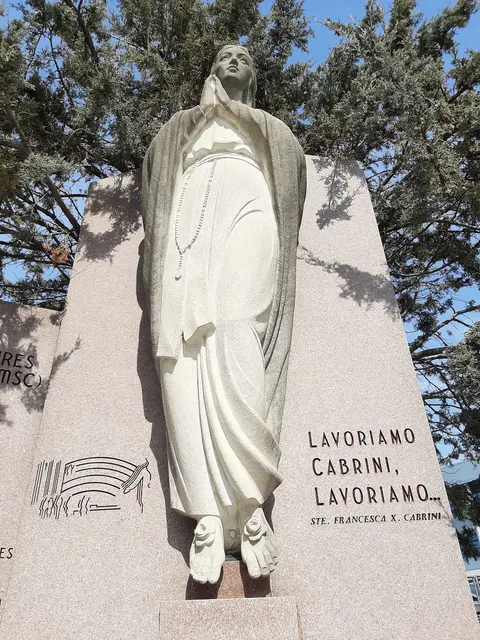
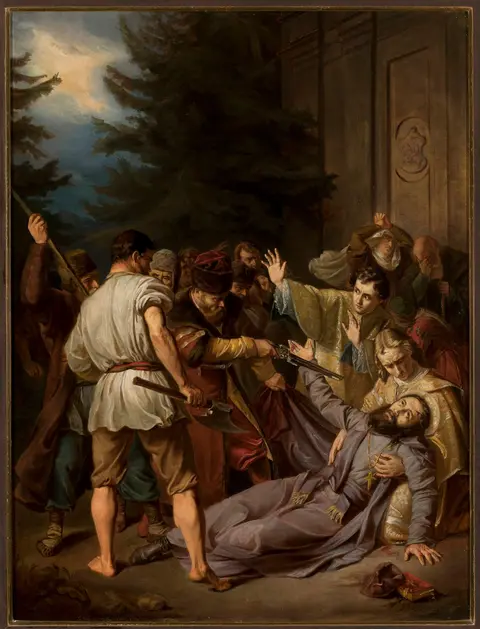
Like St. Frances Xavier Cabrini, she was a European woman who gave her life to the Church in America. Like St. Isaac Jogues and the North American Martyrs, she longed to bring Christ to the native peoples of this land. And like St. Margaret Mary Alacoque, she lived to make known the love of the Sacred Heart of Jesus.
St. Rose Philippine Duchesne, pray for us.
Frequently asked questions
When is the feast day of St. Rose Philippine Duchesne?
Her feast day is November 18, the anniversary of her death in St. Charles, Missouri, in 1852. In the United States it is an optional memorial, so parishes may celebrate it at Mass that day. Schools of the Sacred Heart and the Archdiocese of St. Louis, where she spent most of her American years, often remember her in a special way on that day.
Why was St. Rose Philippine Duchesne called the Woman Who Prays Always?
In 1841, at 71, she went to the Potawatomi mission at Sugar Creek in present-day Kansas. Unable to learn the language well enough to teach, she spent long hours each day in prayer before the Blessed Sacrament. The Potawatomi noticed and gave her a name meaning Woman Who Prays Always. It sums up the quiet strength of her whole life.
What is St. Rose Philippine Duchesne the patron saint of?
The Church has not formally assigned her a patronage, but Catholics commonly ask her prayers for perseverance in hardship, for missionaries, for teachers and Catholic schools, and for Native American Catholics. Because her most fruitful prayer came in her old age, older and homebound people also find in her a friend who shows that prayer is real work for the Kingdom.
Where is St. Rose Philippine Duchesne buried?
Her remains rest at the Shrine of St. Rose Philippine Duchesne in St. Charles, Missouri, near the Academy of the Sacred Heart, on the site where she spent her last years and where she died in 1852. Pilgrims visit the shrine throughout the year, especially around her feast day on November 18.
Sources
- Gospel of Luke 18:1 (NABRE)
- Catechism of the Catholic Church, 849 and 2742–2745
- Proper Calendar for the Dioceses of the United States (USCCB)