St. Peter Canisius: Second Apostle of Germany and Doctor of the Church
Quick answer
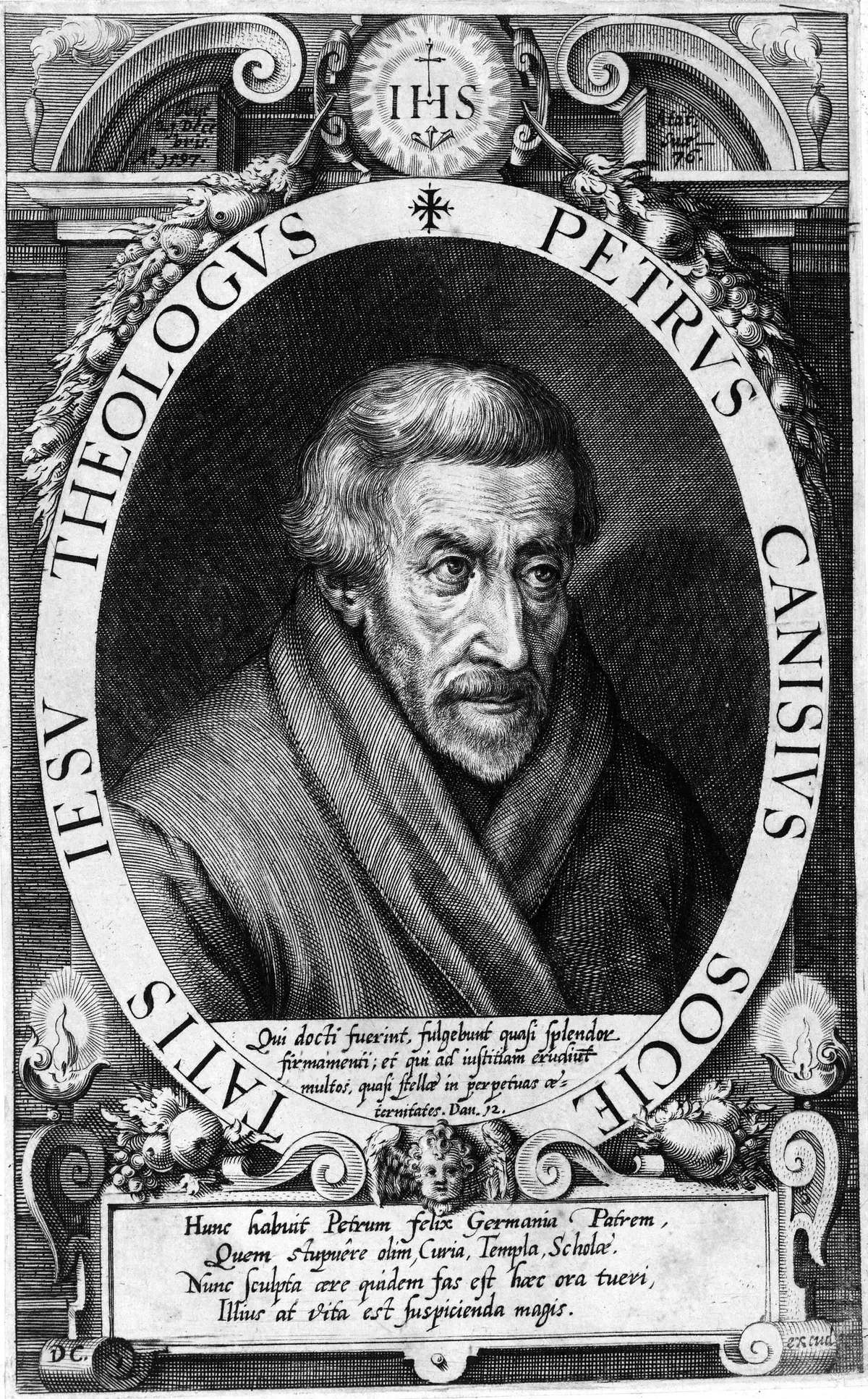
St. Peter Canisius (1521–1597) was a Dutch Jesuit priest, the first Dutchman to join the Society of Jesus, who spent his life renewing the Catholic faith in the German-speaking lands during the Protestant Reformation. He preached tirelessly, founded colleges from Prague to Fribourg, took part in the Council of Trent, and wrote catechisms that went through hundreds of editions. Called the "Second Apostle of Germany," he was canonized and declared a Doctor of the Church by Pope Pius XI in 1925. His feast is December 21.
Key takeaways
- Born in Nijmegen in 1521, he was the first Dutch Jesuit.
- He worked for over 40 years in Germany, Austria, Bohemia and Switzerland.
- His three catechisms were reprinted hundreds of times and used for centuries.
- He preferred patient explanation and charity to polemics.
- He was canonized and declared a Doctor of the Church in 1925; his feast is December 21.
When the Reformation swept through the German-speaking lands in the 16th century, whole regions abandoned the Catholic faith. Many priests were poorly trained, people did not know their catechism, and bitterness ran high on all sides. Into that storm stepped a Dutch Jesuit who answered with patient teaching, tireless preaching and charity. St. Peter Canisius became the “Second Apostle of Germany.”
Early Life
Peter Kanis was born on May 8, 1521, in Nijmegen, in the Netherlands, the son of the town’s mayor. He studied at the University of Cologne, where he joined a circle of devout Catholics. In 1543 he made the Spiritual Exercises under St. Peter Faber, one of St. Ignatius’s first companions, and decided to join the new Society of Jesus. He was the first Dutchman to become a Jesuit.
A Life on the Road
Ignatius soon recognized his gifts. In 1548 Canisius was among the ten Jesuits sent to open the first Jesuit school in Messina, Sicily (see Jesuit education). In 1549 he was sent to Germany, where he would labor for the rest of his life.
He taught theology at Ingolstadt, preached in the cathedral of Vienna, served as the first provincial superior of the Jesuits in Upper Germany, and attended the Council of Trent as a theologian. He founded or helped found colleges in Munich, Innsbruck, Prague, Dillingen, Fribourg and other cities, schools that trained generations of priests and lay leaders. It is estimated that he traveled thousands of miles on foot and horseback.
The Catechisms
Canisius’s greatest legacy was his catechisms. He wrote three: a large Summa of Christian Doctrine (1555) for students and priests, a small catechism for children (1556) and a middle one for young people. They were clear, rooted in Scripture and the Fathers, and free of insults toward Protestants. They went through hundreds of editions in many languages during his lifetime and long after. In parts of Germany, “Canisius” became the word for a catechism.
Charity Instead of Polemics
Canisius believed that truth must be spoken with love. He urged his fellow Jesuits to deal with Protestants gently, recognizing that many had simply grown up without good instruction. In a 2011 audience, Pope Benedict XVI praised him for presenting the faith as a positive proposal centered on Christ rather than as a polemic.
Final Years
In 1580 Canisius was sent to Fribourg, Switzerland, where he founded the College of St. Michael and preached for many years. He died there on December 21, 1597, and is buried in the Church of St. Michael. Pope Pius XI canonized him and declared him a Doctor of the Church on May 21, 1925.
Lessons for Today
- Know your faith. Canisius believed ignorance, more than malice, drove people from the Church.
- Teach the young. He spent enormous energy on schools and catechisms for children.
- Speak the truth in love (Ephesians 4:15).
Read about other Jesuit saints and blesseds and fellow Doctor of the Church St. Robert Bellarmine.
Prayer for His Intercession (Original Prayer)
St. Peter Canisius, faithful teacher of the faith, you spent your life explaining Christ to those who did not know Him. Pray for catechists, teachers and parents, that they may hand on the faith with clarity and love. Pray for Christians divided by history, that we may one day be one in Christ. Amen.
Continue Reading
Read about Jesuit saints and blesseds, the life of St. Ignatius of Loyola, or who the Jesuits are.
Frequently asked questions
When is the feast of St. Peter Canisius?
December 21 in the General Roman Calendar. The Jesuits celebrate him on April 27.
Why is he called the Second Apostle of Germany?
Because his work for the Catholic faith in the German lands was compared to that of St. Boniface, the eighth-century "Apostle of Germany."
Where is St. Peter Canisius buried?
In the Church of St. Michael in Fribourg, Switzerland, where he spent his last years and founded the College of St. Michael.
Sources
- St. Peter Canisius, Summa Doctrinae Christianae (1555) and Small Catechism (1556)
- Pope Pius XI, Misericordiarum Deus (1925)
- Pope Benedict XVI, General Audience on St. Peter Canisius (February 9, 2011)
- "Peter Canisius," Company magazine (Winter 1997–1998)