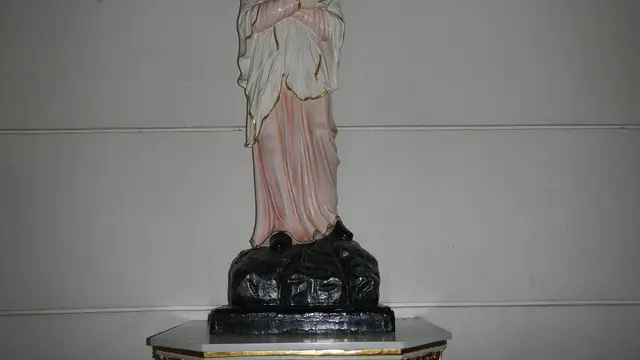
St. Joan of Arc: The Maid of Orléans, Her Voices and Her Trial
Quick answer
St. Joan of Arc (about 1412–1431) was a French peasant girl who said that St. Michael, St. Catherine and St. Margaret told her to help the uncrowned king Charles VII. She led the army that lifted the siege of Orléans in 1429 and saw Charles crowned at Reims. Captured and tried by a politically driven church court, she was burned at the stake at nineteen. A later papal inquiry declared her innocent, and she was canonized in 1920. Her feast is May 30.
Key takeaways
- She grew up in Domrémy, a village in eastern France, and began hearing her voices at about thirteen.
- In 1429 she helped lift the siege of Orléans and brought Charles VII to be crowned at Reims.
- She was captured in 1430 and tried at Rouen by a court allied with the English.
- Her conviction was overturned in 1456, and she was canonized in 1920.
She could not read, she had never held a sword, and she was barely seventeen. Yet St. Joan of Arc changed the course of a war and went to her death with the name of Jesus on her lips.
A Girl from Domrémy
Joan was born around 1412 in Domrémy, a village in eastern France, to a family of farmers. She was known for her devotion, her love of the sacraments and her kindness to the poor. France was then torn by the Hundred Years’ War. The English and their allies held much of the north, and the heir to the throne, Charles, had not been crowned.
The Voices
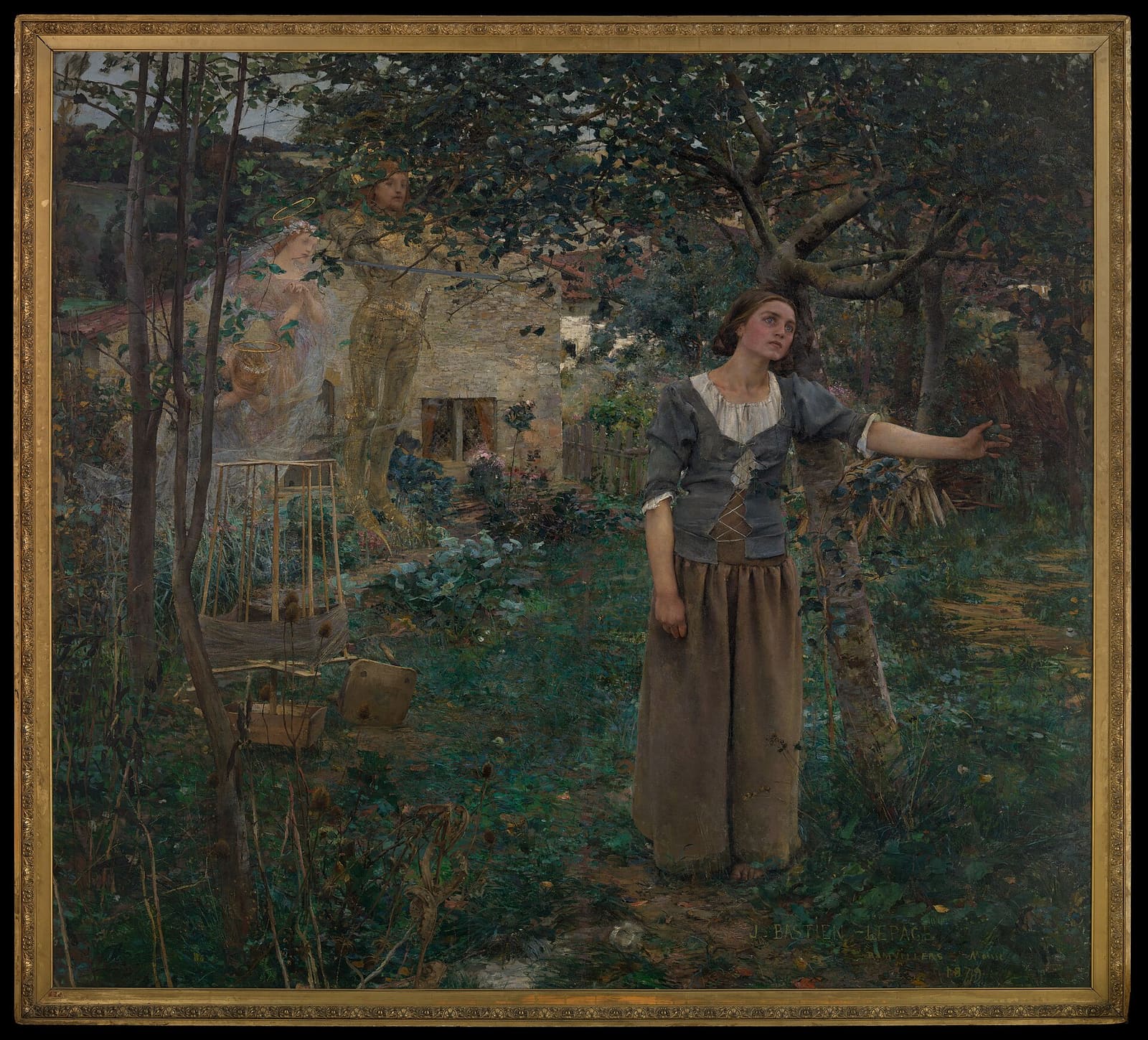
At about thirteen, Joan began to hear voices that she identified as St. Michael the Archangel, St. Catherine of Alexandria and St. Margaret of Antioch. Over time they told her that she must go to Charles and help him to be crowned.
In 1429, after much persistence, she was brought before Charles at Chinon. Theologians questioned her at Poitiers and found nothing against her faith.
Orléans and Reims
Joan rode with the army to the besieged city of Orléans, carrying a banner with the names of Jesus and Mary. She insisted the soldiers go to confession and stop swearing. Within days, in May 1429, the siege was lifted. In July she stood beside Charles VII as he was crowned in the cathedral of Reims.
Capture and Trial
In May 1430 she was captured at Compiègne and handed over to the English. At Rouen a church court led by Bishop Pierre Cauchon, who was allied with the English, tried her for heresy. She had no proper counsel. Her answers were simple and wise. Asked whether she was in God’s grace, a trap either way, she answered that if she was not, she prayed God would put her there, and if she was, she prayed He would keep her there.
On May 30, 1431, she was burned at the stake in Rouen, asking for a crucifix to be held before her and calling on Jesus.
Declared Innocent, Then a Saint
In 1456, a retrial authorized by Pope Callixtus III declared the original trial null. Joan was beatified in 1909 and canonized by Pope Benedict XV in 1920. Her story reminds us that church courts can err, and that God vindicates the innocent.
A Prayer for Courage (Original Prayer)
St. Joan, you trusted God when everyone doubted you. Give me courage to do what is right, honesty when I am questioned, and peace when I am misunderstood. Amen.
Continue Reading
Read the story of St. Michael the Archangel, whose voice Joan heard, or about St. Genevieve, another patron of France.
Frequently asked questions
When is the feast of St. Joan of Arc?
May 30, the day of her death in 1431.
Why was Joan of Arc burned if she is a saint?
Her trial was run by churchmen allied with the English, who had political reasons to discredit her. In 1456 a retrial authorized by Pope Callixtus III declared the first trial null.
What is she the patron saint of?
France, soldiers, and people who suffer for their faith.
Sources
- Trial of Condemnation (1431) and Trial of Nullification (1456), transcripts
- Pope Benedict XV, Canonization of St. Joan of Arc (May 16, 1920)
- Pope Benedict XVI, General Audience on St. Joan of Arc (January 26, 2011)