The True Story Behind Silence: Jesuits and Martyrs in Japan
Quick answer
Silence, Shusaku Endo's 1966 novel filmed by Martin Scorsese in 2016, is based on real events. Jesuit missionaries, beginning with St. Francis Xavier in 1549, helped build a Japanese Church of hundreds of thousands. From 1614 the shogunate banned Christianity, killing thousands. In 1633 the Jesuit provincial Cristóvão Ferreira renounced the faith under torture, while Blessed Julian Nakaura died a martyr. In 1643 Fr. Giuseppe Chiara, the model for Endo's Rodrigues, was captured and also apostatized. Yet hidden Christians kept the faith in secret for over two centuries.
Key takeaways
- St. Francis Xavier brought the Gospel to Japan in 1549.
- The 26 Martyrs of Japan, including three Jesuits, were crucified at Nagasaki in 1597.
- Jesuit Cristóvão Ferreira apostatized under torture in 1633, as in the novel.
- The character Sebastião Rodrigues is based on the Italian Jesuit Giuseppe Chiara.
- Hidden Christians kept the faith secretly until missionaries returned in the 1860s.
In March 2009 the Jesuits’ newsletter JesuitUSA News reported that Martin Scorsese was preparing a film of Shusaku Endo’s novel Silence, the story of Portuguese Jesuits in 17th-century Japan. The film appeared in 2016, starring Andrew Garfield and Liam Neeson, and was shown at the Vatican to an audience of Jesuits. Many viewers asked: did this really happen? Largely, yes.
The Christian Century of Japan
The Gospel arrived in Japan in 1549 with St. Francis Xavier. Jesuit missionaries followed, learning Japanese, building schools and printing presses, and even training Japanese painters. Several powerful lords were baptized. By 1600 there were perhaps 300,000 Japanese Catholics, many of them in and around Nagasaki.
Persecution
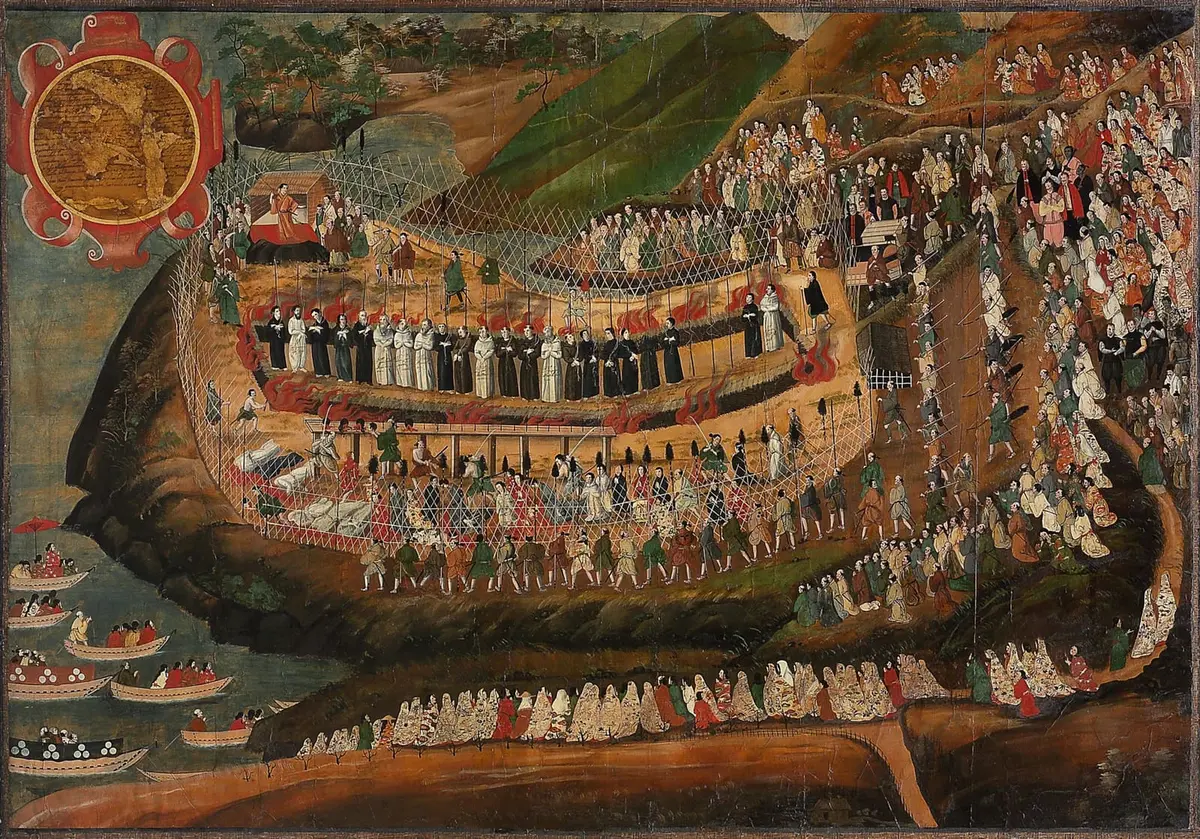
Japan’s rulers came to see Christianity as a threat linked to European powers. In 1597, twenty-six Catholics were crucified on a hill in Nagasaki, among them three Japanese Jesuits, St. Paul Miki, St. John de Goto and St. James Kisai. They are the 26 Martyrs of Japan, canonized in 1862.
In 1614 the shogunate banned Christianity entirely and expelled the missionaries. Some priests stayed hidden. Over the next decades thousands of Christians were killed, burned, beheaded, thrown into boiling hot springs or crucified. Suspects were forced to step on a fumie, an image of Christ or Mary, to prove they had renounced the faith. In the Great Martyrdom of 1622, Blessed Charles Spinola, an Italian Jesuit, and dozens of others died at Nagasaki.
Cristóvão Ferreira
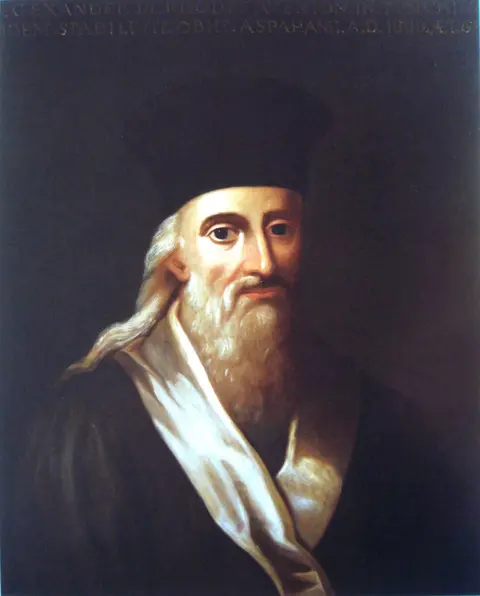
The most shocking event came in 1633. The Portuguese Jesuit Cristóvão Ferreira, provincial superior of the Jesuits in Japan, was captured and subjected to the ana-tsurushi, the “pit”: hanging upside down over a pit of filth, with a small cut behind the ear so that blood dripped slowly. After about five hours, he gave the sign of apostasy. He took a Japanese name, married and worked for the authorities, even writing a book against Christianity. His fall became a scandal throughout the Catholic world.
Hung in the same pit at the same time was Julian Nakaura, a Japanese Jesuit who, as a boy, had traveled to Rome with the famous embassy of 1582 and met Pope Gregory XIII. He endured for days and died crying, it is said, “I am Julian Nakaura, who went to Rome.” He was beatified in 2008 with 187 Japanese martyrs.
The Real Rodrigues: Giuseppe Chiara
Endo’s hero, Sebastião Rodrigues, goes to Japan to find Ferreira. He is based on the Italian Jesuit Giuseppe Chiara, who landed secretly in 1643 with other missionaries. They were captured almost at once and, under torture, apostatized. Chiara lived the rest of his life under guard in Edo (Tokyo), with a Japanese name, and died in 1685. Whether he ever repented in his heart, only God knows. Endo’s novel imagines that inner struggle.
The Hidden Christians
The most amazing part of the story is not in the novel. After the priests were gone, groups of Japanese Catholics, the Kakure Kirishitan, kept the faith in secret for more than 200 years. They baptized their children, prayed the Our Father and Hail Mary in disguised forms, kept hidden images of Mary that looked like Buddhist statues, and passed on the prophecy that priests would one day return.
On March 17, 1865, at the new Oura Church in Nagasaki, a group of villagers approached the French missionary Fr. Bernard Petitjean and whispered that they shared his faith. Their first question was where the statue of Mary was. Popes since have pointed to these hidden Christians as proof that the faith can survive for generations through the prayer and witness of lay people alone.
The Question of Silence
Endo’s title refers to God’s apparent silence in the face of suffering. The novel asks whether trampling on Christ’s image could ever be an act of love. Catholic readers have debated it fiercely. The Church honors the martyrs, who preferred death to denying Christ (CCC 2473), and it also proclaims that no sinner is beyond God’s mercy if he repents. The deepest answer to God’s silence is the Cross itself, where the Son of God suffered with us and for us. Read about other Jesuit martyrs and about Jesuit mission art in Japan.
Prayer to the Martyrs of Japan (Original Prayer)
Holy martyrs of Japan, St. Paul Miki and companions, Blessed Julian Nakaura and all who gave their lives for Christ, pray for us when our faith is tested. Give us courage never to deny the Lord, humility to rise when we fall, and trust in the mercy of Jesus, who never abandons us. Amen.
Continue Reading
Read the life of St. Francis Xavier, the Jesuit saints and blesseds, or our Jesuit reading list.
Frequently asked questions
Is Silence based on a true story?
Yes, in large part. Cristóvão Ferreira was a real Jesuit who renounced the faith in 1633 and lived in Japan under a Japanese name. The hero, Rodrigues, is modeled on Fr. Giuseppe Chiara, who entered Japan secretly in 1643, was captured and apostatized. The details of the story are Endo's fiction.
Does the Church approve of Rodrigues's choice?
The novel raises hard questions on purpose. The Church honors the martyrs who refused to deny Christ. It also teaches that God's mercy reaches every sinner who repents. Endo, a Catholic, wanted readers to wrestle with both.
Who were the hidden Christians of Japan?
Kakure Kirishitan, Japanese Catholics who kept the faith in secret without priests from the 1600s. In 1865 some of them revealed themselves to a French priest at the new Oura Church in Nagasaki.
Sources
- Shusaku Endo, Silence (1966; English trans. William Johnston, SJ, 1969)
- Hubert Cieslik, SJ, studies on the Japanese martyrs and Ferreira
- JesuitUSA News, March 13, 2009, on the upcoming film
- Pope St. John Paul II, homily for the canonization of the martyrs of Nagasaki (1987)