The Jesuit Caves of Maastricht: An Underground Gallery of Art
Quick answer
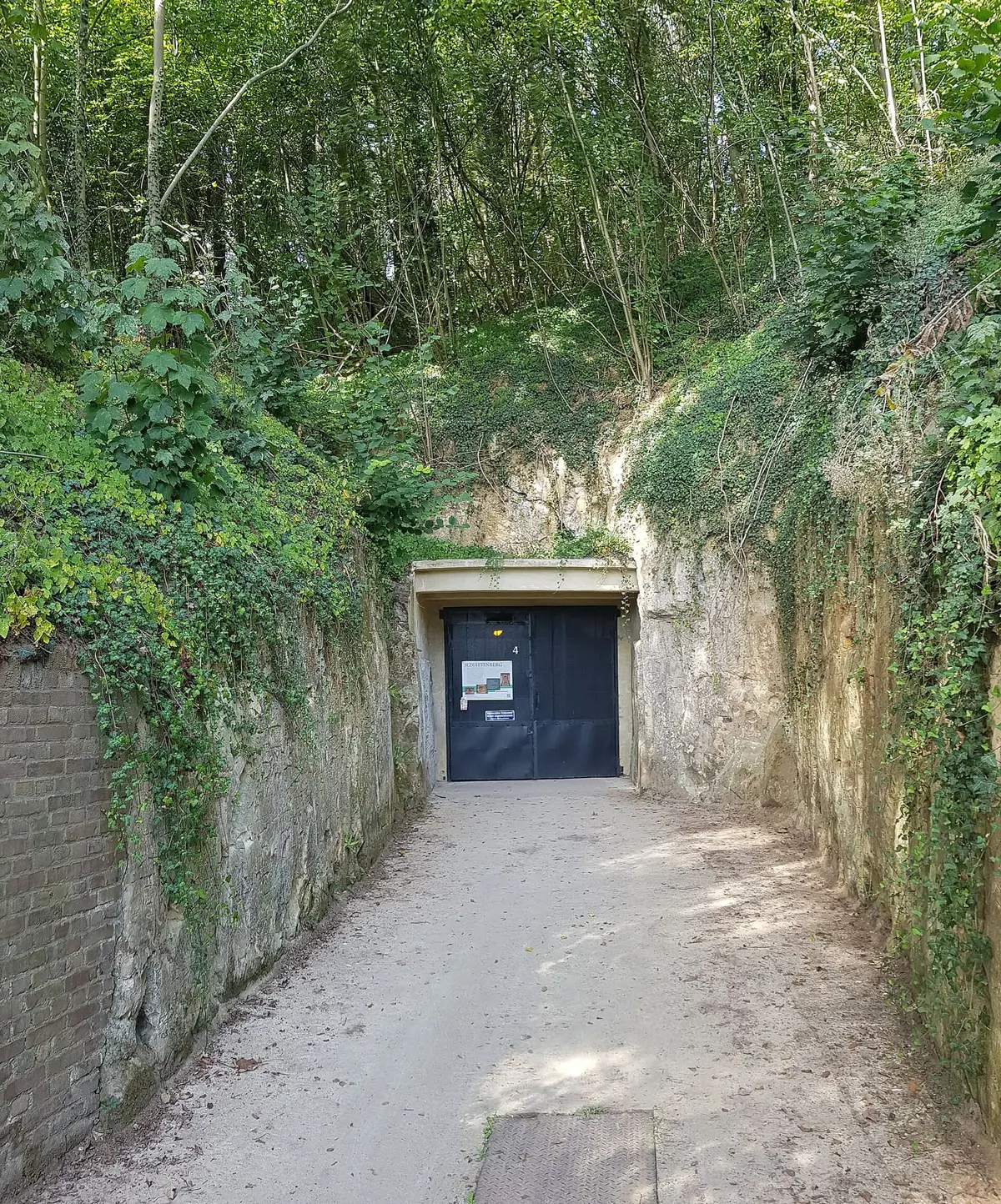
The Jezuïetenberg, or Jesuit caves, is part of an old marlstone quarry in the Cannerberg near Maastricht in the Netherlands. From about 1860 to 1962, Jesuit theology students studying in Maastricht walked to the caves on their weekly day off. There they read, played games and, over generations, carved and painted hundreds of works into the soft stone, from Egyptian scenes and Romeo and Juliet to a large Alhambra built by about 30 Jesuits between 1927 and 1930. The caves are now a protected landmark and can be visited with a guide.
Key takeaways
- The Jezuïetenberg is a former marlstone quarry near Maastricht.
- Jesuit theology students decorated it on their days off from about 1860 to 1962.
- About 30 Jesuits built a replica of the Alhambra there between 1927 and 1930.
- The works range from sacred scenes to literature, history and humor.
- The caves can be visited today only on guided tours.
A few steps into a cave, and you are on your own for light and direction. Caves have always been places of mystery: Plato’s cave of shadows, the cave where St. Jerome translated the Bible in Bethlehem, and the cave at Manresa in Spain, where St. Ignatius spent months in prayer and wrote the first parts of the Spiritual Exercises. Just outside Maastricht in the Netherlands, there is another cave with a Jesuit story: the Jezuïetenberg.
A Quarry Under the Hill
The Cannerberg hill near Maastricht is honeycombed with tunnels left by centuries of quarrying. Workers cut marlstone, a soft limestone formed from fossils when the region lay under the sea, for building and fertilizer. The Romans quarried here, and medieval builders used the stone for castles, churches and houses.
A Day Off Underground
For roughly a century, from about 1860 to 1962, the Jesuits had a house of theology studies in Maastricht. Once a week, the young Jesuits had a day off from classes. Many walked to the caves, where they could read, play games or simply enjoy the quiet.
Some picked up chisels and paintbrushes. Over the generations they carved and painted hundreds of works into the soft walls: scenes from Egyptian temples and Greek myths, saints and biblical figures, characters from Shakespeare, castles, animals and comic touches. One scene from Romeo and Juliet, from the late 1950s, was mostly the work of a Jesuit named George Wüst, with details added by his companions.
The Alhambra
The showpiece of the Jezuïetenberg is a version of the Alhambra, the Moorish palace of Granada, Spain. About 30 Jesuits worked on it in their spare time from 1927 to 1930, carving arches, columns and decorative patterns deep inside the hill.
A Landmark Today
When the Jesuits left Maastricht in the 1960s, the caves fell quiet. Today they are a protected landmark, and visitors can explore them with a guide, lamp in hand. As Company magazine observed, the caves are not as epic as Manresa or Bethlehem, but they too give entry into another world.
Finding God in All Things
The caves are a delightful reminder that Jesuit formation was not all study. These young men prayed, studied and also played and created. St. Ignatius taught his followers to find God in all things, including beauty, friendship and humor. Their art in the dark is a testimony to that joy.
Prayer for Artists (Original Prayer)
Creator God, You formed the mountains and the depths of the earth, and You made us in Your image to create beauty. Bless all artists, craftsmen and students. May our work and our play give You glory, and may we find You in all things. Amen.
Continue Reading
Read about Jesuit mission art, Jesuit theater, or St. Ignatius of Loyola.
Frequently asked questions
Can you visit the Jesuit caves in Maastricht?
Yes, but only with a guide, since the passages are dark and maze-like. Tours are offered seasonally from Maastricht; check with local tourist information for times.
Why did Jesuits decorate a cave?
The caves were a quiet place where theology students spent their free day each week. Over decades, many used their time there for sculpture and painting, leaving a unique record of their imagination and humor.
Sources
- Edward W. Schmidt, SJ, "Passage to an Underworld," Company magazine (Spring 2002)
- St. Ignatius of Loyola, Autobiography (the cave at Manresa)