Bernard Lonergan: The Jesuit Philosopher of Insight
Quick answer
Bernard Lonergan, SJ (1904–1984), was a Canadian Jesuit philosopher and theologian. In Insight (1957) he studied how human beings come to know anything, from mathematics to common sense, and in Method in Theology (1972) he proposed a method for theology built on the operations of the mind and on religious conversion. He summed up his approach in four "transcendental precepts": be attentive, be intelligent, be reasonable, be responsible. Many consider him one of the most important Catholic thinkers of the 20th century.
Key takeaways
- Lonergan was born in Buckingham, Quebec, in 1904 and became a Jesuit in 1922.
- His masterpiece Insight (1957) is a study of human understanding.
- Method in Theology (1972) bases theology on intellectual, moral and religious conversion.
- His four precepts are be attentive, be intelligent, be reasonable, be responsible.
- He wanted Catholic thought to "mount to the level of the times."
In a 1949 lecture, the Canadian Jesuit Bernard Lonergan said that a second-rate Catholic education was no more acceptable to God than the maimed animals the Old Testament prophets condemned as sacrifices (Malachi 1:8). He held himself to the same standard. Four years later, finishing his great book Insight, he admitted it might be reproached for “excessive ambition,” but insisted that “one has to strive to mount to the level of one’s time.” As Company magazine put it in a 1996 profile, that was his vocation: to be a Christian thinker.
Early Life
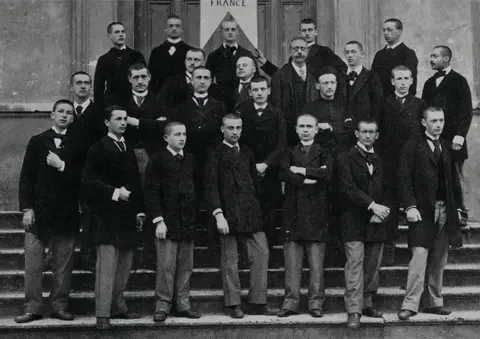
Bernard Lonergan was born in 1904 in Buckingham, Quebec, near Ottawa. He was not, his biographers note, born with a scholar’s vocation. Like other boys he went to school, served at the altar and found Sunday vespers tedious. He entered the Jesuits in 1922, studied in England and Rome and was ordained in 1936.
His doctoral work at the Gregorian University in Rome studied St. Thomas Aquinas on grace. He then spent years reading Aquinas on knowledge and the “inner word,” discovering that the medieval master had a profound theory of human understanding.
Insight
Lonergan taught theology in Montreal, Toronto and Rome. In 1957 he published Insight: A Study of Human Understanding. It is a demanding book, but its central idea is simple. Think of the moment when a puzzle suddenly makes sense, when Archimedes shouted “Eureka!” in his bath. Lonergan asked: what happens when we understand? He traced the act of insight through mathematics, science, common sense and philosophy.
He showed that knowing has three levels:
- Experience: we see, hear, feel and remember.
- Understanding: we ask “What is it?” and grasp an insight.
- Judgment: we ask “Is it so?” and weigh the evidence.
To these he added a fourth, decision: “What should I do?”
Be Attentive, Intelligent, Reasonable, Responsible
From these levels came Lonergan’s famous transcendental precepts: Be attentive. Be intelligent. Be reasonable. Be responsible. They describe what it means to be an authentic human being. Lonergan added that the deepest fulfillment comes when we fall in love with God, a love “poured into our hearts through the Holy Spirit” (Romans 5:5).
Method in Theology
In 1972 he published Method in Theology, proposing a way for theologians to work together across specialties, from research in the sources to communication with the world. At its center is conversion: intellectual (seeking truth honestly), moral (choosing real value over mere satisfaction) and religious (being grasped by God’s love).
Legacy
Lonergan taught at Regis College in Toronto, the Gregorian University, Harvard and Boston College, where he died in 1984. He was named a Companion of the Order of Canada. Lonergan centers around the world study his work, and his collected works fill 25 volumes.
His project fits Pope St. John Paul II’s teaching that “faith and reason are like two wings on which the human spirit rises to the contemplation of truth” (Fides et Ratio, introduction). For the Jesuit ideal of serious study in the service of faith, see Jesuit education.
Prayer for Understanding (Original Prayer)
Holy Spirit, Spirit of truth, open my eyes to see, my mind to understand, my judgment to weigh what is true, and my will to choose what is good. Pour Your love into my heart, that all my knowing may lead me to You. Amen.
Continue Reading
Read about Jesuit education, St. Robert Bellarmine, another great Jesuit theologian, or the Jesuit reading list.
Frequently asked questions
What is Lonergan's Insight about?
It is a study of the act of understanding, the "aha" moment, in mathematics, science, common sense and philosophy. Lonergan invites readers to notice how their own minds work and argues that this leads to knowledge of being and, finally, of God.
What are Lonergan's transcendental precepts?
Be attentive (to experience), be intelligent (in understanding), be reasonable (in judging) and be responsible (in deciding). He believed every authentic human life follows them, and that falling in love with God completes them.
Sources
- "Christian Thinker," Company magazine (Spring 1996)
- Bernard Lonergan, SJ, Insight, A Study of Human Understanding (1957)
- Bernard Lonergan, SJ, Method in Theology (1972)
- Pope St. John Paul II, Fides et Ratio (1998)