The Traditional Latin Mass: Its History, Meaning and How to Attend One
Quick answer
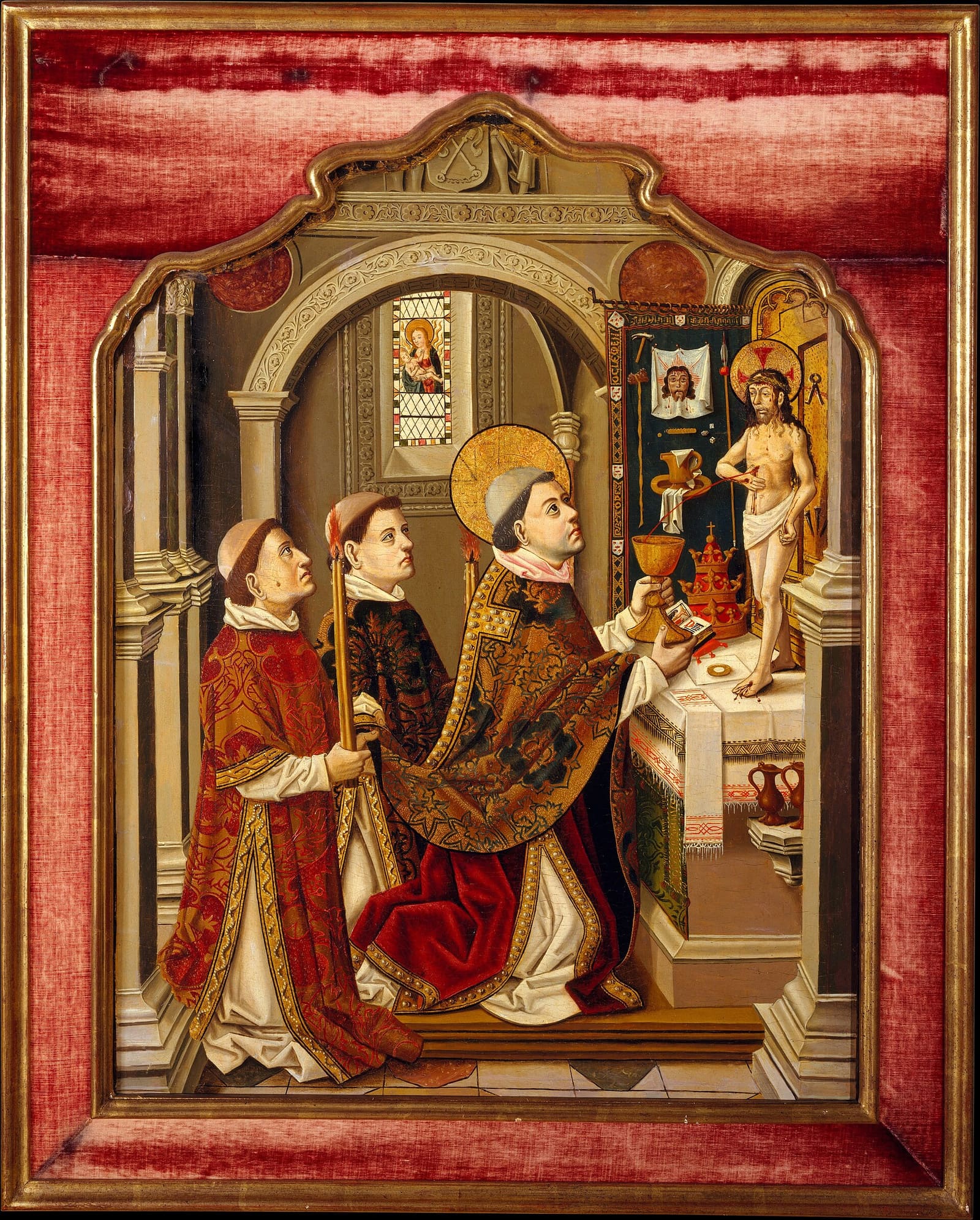
The Traditional Latin Mass is the Roman Rite as celebrated according to the 1962 Roman Missal, in Latin, with Gregorian chant and the priest facing the altar with the people. It may be celebrated today under the rules set by Pope Francis in Traditionis custodes (2021), with the permission of the diocesan bishop. Catholics who attend a Latin Mass approved by their bishop fulfill their Sunday obligation.
Key takeaways
- The Traditional Latin Mass follows the 1962 Roman Missal, the last edition before the reform that followed the Second Vatican Council.
- Pope Benedict XVI widened access to it in 2007 with Summorum Pontificum.
- Since 2021, Traditionis custodes places its celebration under the authority of the diocesan bishop, with some permissions reserved to the Holy See.
- In 2026 Cardinal Arthur Roche, prefect of the Dicastery for Divine Worship, said that Pope Leo XIV would keep those rules in place.
For many Catholics over fifty, the Latin Mass is the Mass of their childhood: the bells, the chant, the priest facing the altar, the hush at the consecration. Others are discovering it for the first time. Here is what it is, and how the Church governs it today.
What Is the Traditional Latin Mass?
The Traditional Latin Mass, also called the Tridentine Mass or the usus antiquior, is the Mass of the Roman Rite celebrated according to the 1962 Roman Missal. That missal is the last edition of a book whose shape goes back to Pope St. Pius V, who published it in 1570 after the Council of Trent, and much further still, to the prayers of the early Roman Church.
It is the same Holy Sacrifice as every Catholic Mass. What differs is the form: its prayers, gestures and language.
What Makes It Different
- Latin. Almost all of the Mass is in Latin. The readings are often repeated in the local language before the homily.
- The direction of prayer. The priest and people face the same way, toward the altar and the crucifix, traditionally toward the east.
- Silence. Many prayers, including most of the Eucharistic Prayer, are said quietly by the priest.
- The Roman Canon. The 1962 Missal has one Eucharistic Prayer, the ancient Roman Canon.
- Chant. At a sung Mass, Gregorian chant is used, which the Second Vatican Council said should have “pride of place” in the Roman liturgy (Sacrosanctum Concilium 116).
- Holy Communion. It is usually received kneeling, on the tongue.
- The Last Gospel. The Mass ends with the reading of John 1:1-14.
Low Mass and High Mass
At a Low Mass the priest says the prayers without singing, often with one server. At a Missa Cantata or Solemn High Mass, the prayers and propers are sung, and at a Solemn Mass the priest is assisted by a deacon and subdeacon.
The Order of the Mass
Following along is easier when you know the main parts.
- Prayers at the Foot of the Altar. The priest and server pray Psalm 42 and the Confiteor before going up to the altar.
- Introit, Kyrie and Gloria.
- Collect, Epistle, Gradual and Gospel.
- Homily and Creed.
- Offertory. The priest offers the bread and wine with ancient prayers.
- Preface and Sanctus.
- The Roman Canon and the Consecration. Bells are rung as the Host and the Chalice are raised.
- Our Father, Agnus Dei and Holy Communion.
- Dismissal, Blessing and the Last Gospel.
The Opening Verse of the Mass (Psalm 42:4, Douay-Rheims)
I will go in to the altar of God: to God who giveth joy to my youth.
In Latin, this is the famous Introibo ad altare Dei.
How the Church Has Governed It
The story since the Second Vatican Council has had several stages.
| Year | Document | What it did |
|---|---|---|
| 1963 | Sacrosanctum Concilium | The Council called for reform of the liturgy, while asking that Latin be preserved and that the faithful be able to say or sing parts of the Mass in Latin (nos. 36, 54) |
| 1970 | Missal of St. Paul VI | The reformed Missal became the ordinary form of the Roman Rite |
| 1984 | Quattuor abhinc annos | Allowed bishops to permit the 1962 Missal for groups who requested it |
| 1988 | Ecclesia Dei | St. John Paul II asked bishops to be generous toward those attached to the older liturgy |
| 2007 | Summorum Pontificum | Benedict XVI allowed any priest to use the 1962 Missal, calling it an extraordinary form of the one Roman Rite |
| 2021 | Traditionis custodes | Pope Francis returned the matter to the authority of the diocesan bishop and set new limits |
| 2023 | Rescript | Reserved certain permissions, such as celebrations in parish churches, to the Holy See |
In his letter to the bishops in 2007, Pope Benedict wrote that what earlier generations held as sacred remains sacred and great for us too. In 2021 Pope Francis wrote of his concern that the older form was at times being used to oppose the Second Vatican Council and to divide the Church. Both popes, in different ways, wanted to protect the unity of the Church.
Where Things Stand Today
As of this writing, Traditionis custodes and the clarifications that followed remain in force. In 2026 Cardinal Arthur Roche, the prefect of the Dicastery for Divine Worship, said publicly that Pope Leo XIV did not intend to reverse them. Pope Leo has also spoken of the divisions over the liturgy as a painful wound and urged bishops to seek solutions. Arrangements vary from diocese to diocese, so your diocese is the best source of current information.
How to Find and Attend One
- Ask your diocese. Many diocesan websites list the parishes and chapels where the Latin Mass is permitted.
- Look for approved communities. Priestly societies such as the Priestly Fraternity of St. Peter and the Institute of Christ the King Sovereign Priest celebrate the older form in full communion with the Church, where bishops invite them.
- Bring or borrow a missal. A hand missal with Latin and English on facing pages helps a great deal.
- Do not worry about getting everything right. Watch, listen and pray. The silence is part of the prayer.
- Dress with simple respect. Many women at these Masses wear a veil, but it is not required.
A Prayer Before Mass (Original Prayer)
Lord Jesus, I come to Your altar. Quiet my heart so that I may adore You. Unite my offering with Yours, and keep me in charity with all my brothers and sisters, whatever form of the Mass they love. Amen.
Continue Reading
Learn about the history of the Catholic Mass, read St. Justin Martyr’s description of the early Mass, or see our guide to the popes.
Frequently asked questions
Is the Traditional Latin Mass still allowed?
Yes, where the diocesan bishop permits it, under the norms of Traditionis custodes (2021) and the later clarifications from the Holy See. Your diocese can tell you where it is offered.
Does attending a Latin Mass fulfill my Sunday obligation?
Yes, a Mass celebrated by a priest in good standing with the Church and approved by the bishop fulfills the Sunday obligation, whatever its language or form.
Do I need to know Latin to attend?
No. Many people use a hand missal or a booklet with Latin and English side by side. Most churches that offer the Latin Mass provide them.
Is the Latin Mass better than the Mass in English?
Both are celebrations of the same Holy Sacrifice of Christ. The Church honors the beauty of the older form and also teaches that the reformed Missal is the ordinary expression of the Roman Rite. Catholics can love one form without despising the other.
Sources
- Pope Benedict XVI, Apostolic Letter Summorum Pontificum and Letter to Bishops (July 7, 2007)
- Pope Francis, Apostolic Letter Traditionis custodes (July 16, 2021)
- Dicastery for Divine Worship, Rescript on Traditionis custodes (February 20, 2023)
- Second Vatican Council, Sacrosanctum Concilium (1963), nos. 36, 54, 116
- Congregation for Divine Worship, Quattuor abhinc annos (October 3, 1984)
- The Catholic Herald, Vatican signals continuity on Latin Mass restrictions