History of the Catholic Mass: From the Last Supper to Today
Quick answer
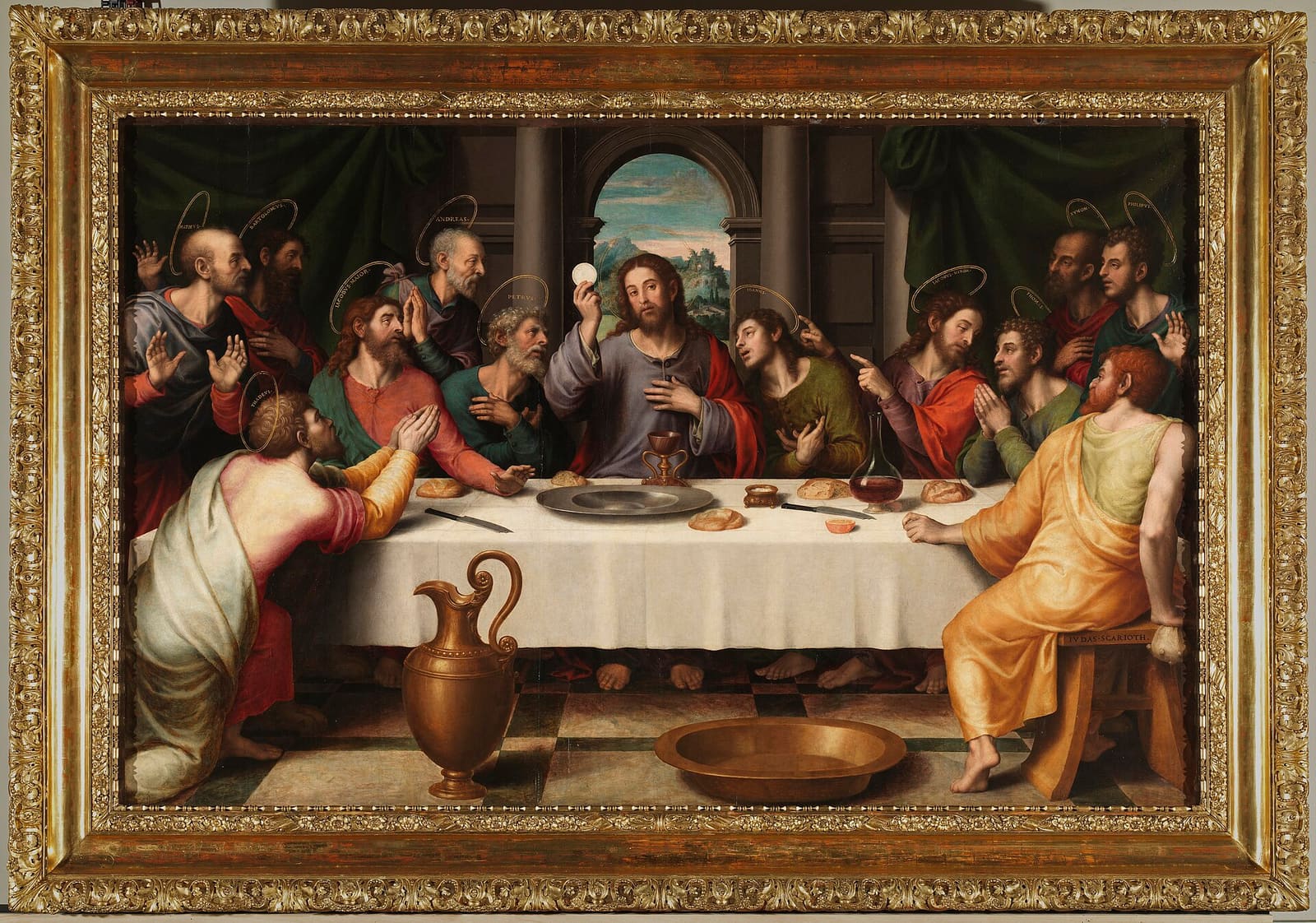
The Mass goes back to the Last Supper, when Jesus commanded His apostles to "do this in memory of me." From the first Christians' breaking of bread, the Roman liturgy grew slowly over the centuries, adopting Latin, the Roman Canon and Gregorian chant. It was standardized after the Council of Trent in 1570 and reformed after the Second Vatican Council in 1970.
Key takeaways
- Jesus instituted the Eucharist at the Last Supper (Luke 22:19-20; CCC 1323).
- St. Justin Martyr described a Sunday Mass around the year 155 that Catholics would recognize today (CCC 1345).
- By the late fourth century the liturgy in Rome was celebrated in Latin.
- The Missal of 1570 shaped Catholic worship for four centuries, and the Missal of 1970 is the ordinary form today.
The Mass is the same in its heart at every altar and in every age: the sacrifice of Christ made present. Its outward form, however, has grown over two thousand years, like a great tree from a small seed.
The Last Supper
On the night before He died, Jesus took bread and wine, gave thanks, and gave them to His disciples as His Body and Blood. He told them, “Do this for a commemoration of me” (Luke 22:19, Douay-Rheims). The Church has obeyed ever since (CCC 1356).
The First Christians
After Pentecost, the believers “were persevering in the doctrine of the apostles, and in the communication of the breaking of bread, and in prayers” (Acts 2:42, Douay-Rheims). St. Paul passed on to the Corinthians what he had received about the Lord’s Supper (1 Corinthians 11:23-26).
Around the year 155, St. Justin Martyr described a Sunday gathering with readings from the apostles and prophets, a homily, prayers for all, the offering of bread and wine, a great prayer of thanksgiving, and Holy Communion. The Catechism quotes his account to show that the structure of the Mass has remained the same (CCC 1345).
Rome Adopts Latin
The earliest Christians in Rome worshiped in Greek, the common language of the empire. During the fourth century, the liturgy in Rome changed to Latin, which had become the everyday language of the West.
In the same period, the Roman Canon took shape. This solemn Eucharistic Prayer, with its lists of apostles and martyrs, remained the only Eucharistic Prayer of the Roman Rite until 1970, and it is still used today as Eucharistic Prayer I.
Gregory the Great and Chant
Pope St. Gregory the Great (590–604) is remembered for ordering the prayers of the Roman liturgy. The chant of the Roman Church came to bear his name: Gregorian chant. Over the following centuries, Roman worship spread across Europe, helped by Charlemagne, and it absorbed local traditions along the way.
The Council of Trent
During the sixteenth century, with the Protestant Reformation challenging Catholic teaching on the Mass, the Council of Trent firmly taught that the Mass is a true sacrifice. It asked for a reliable common missal. In 1570, Pope St. Pius V published the Roman Missal, based on the ancient use of the city of Rome. This is why the older form is often called the “Tridentine” Mass, after Trent.
That missal was revised several times, most recently in 1962 under St. John XXIII, who added the name of St. Joseph to the Roman Canon.
The Second Vatican Council
In 1963 the Second Vatican Council issued Sacrosanctum Concilium, its constitution on the liturgy. It called for a fuller, more active participation of the faithful (no. 14), a richer reading of Scripture (no. 51), and the use of the local language where useful, while asking that Latin be preserved (no. 36) and that chant keep pride of place (no. 116).
The reformed Missal of St. Paul VI came into use in 1970. It is the Mass most Catholics attend today. The current English translation was introduced in 2011.
One Mass, Many Rites
The Roman Rite is not the only way the Mass is celebrated. Eastern Catholic Churches celebrate the Divine Liturgy in their own ancient rites, and the Church honors all lawfully recognized rites as equal in dignity (CCC 1203). In the West, the older form of the Roman Rite is still celebrated in some places today. See our guide to the Traditional Latin Mass.
A Prayer of Thanksgiving for the Mass (Original Prayer)
Lord Jesus, You gave us Your Body and Blood on the night You were betrayed. Thank You for every Mass offered from the Upper Room until today. Help me to come to Your altar with faith, reverence and love. Amen.
Continue Reading
Read about the early Christian writings that describe the first Masses, or learn what Catholics believe about Jesus.
Frequently asked questions
When did the Mass start being said in Latin?
In Rome, Greek gave way to Latin during the fourth century, when Latin had become the language of ordinary people in the West.
What is the oldest part of the Mass?
The Roman Canon, now Eucharistic Prayer I, is among the oldest, with its core in place by about the end of the fourth century. The Our Father, of course, comes from Jesus Himself.
Why did the Church reform the Mass after Vatican II?
The Council wanted the faithful to take a fuller, more conscious and active part in the liturgy, and asked for the rites to be simplified and for more Scripture to be read (Sacrosanctum Concilium 14, 50-51).
Sources
- Luke 22:19-20; 1 Corinthians 11:23-26; Acts 2:42
- St. Justin Martyr, First Apology 65-67
- Council of Trent, Session XXII (1562); Pope St. Pius V, Quo Primum (1570)
- Second Vatican Council, Sacrosanctum Concilium (1963)
- Catechism of the Catholic Church 1203, 1322-1345, 1356