What Does the Catholic Church Teach About Hell? Why Is It Eternal?
Quick answer
The Catholic Church teaches that hell is real. It is the state of definitive self-exclusion from communion with God, chosen by freely and finally refusing His love. God predestines no one to hell, and the Church prays that no one will be lost. It teaches about hell in order to call us to conversion.
Key takeaways
- The Catechism defines hell as a state of definitive self-exclusion from communion with God (CCC 1033).
- Its chief pain is eternal separation from God, for whom we were created (CCC 1035).
- God predestines no one to hell (CCC 1037).
- The Church has never declared that any particular person is in hell.
Hell is not a popular subject, but Jesus spoke about it plainly. The Church does the same because she takes human freedom seriously, and because she wants everyone to reach heaven.
What Scripture Says
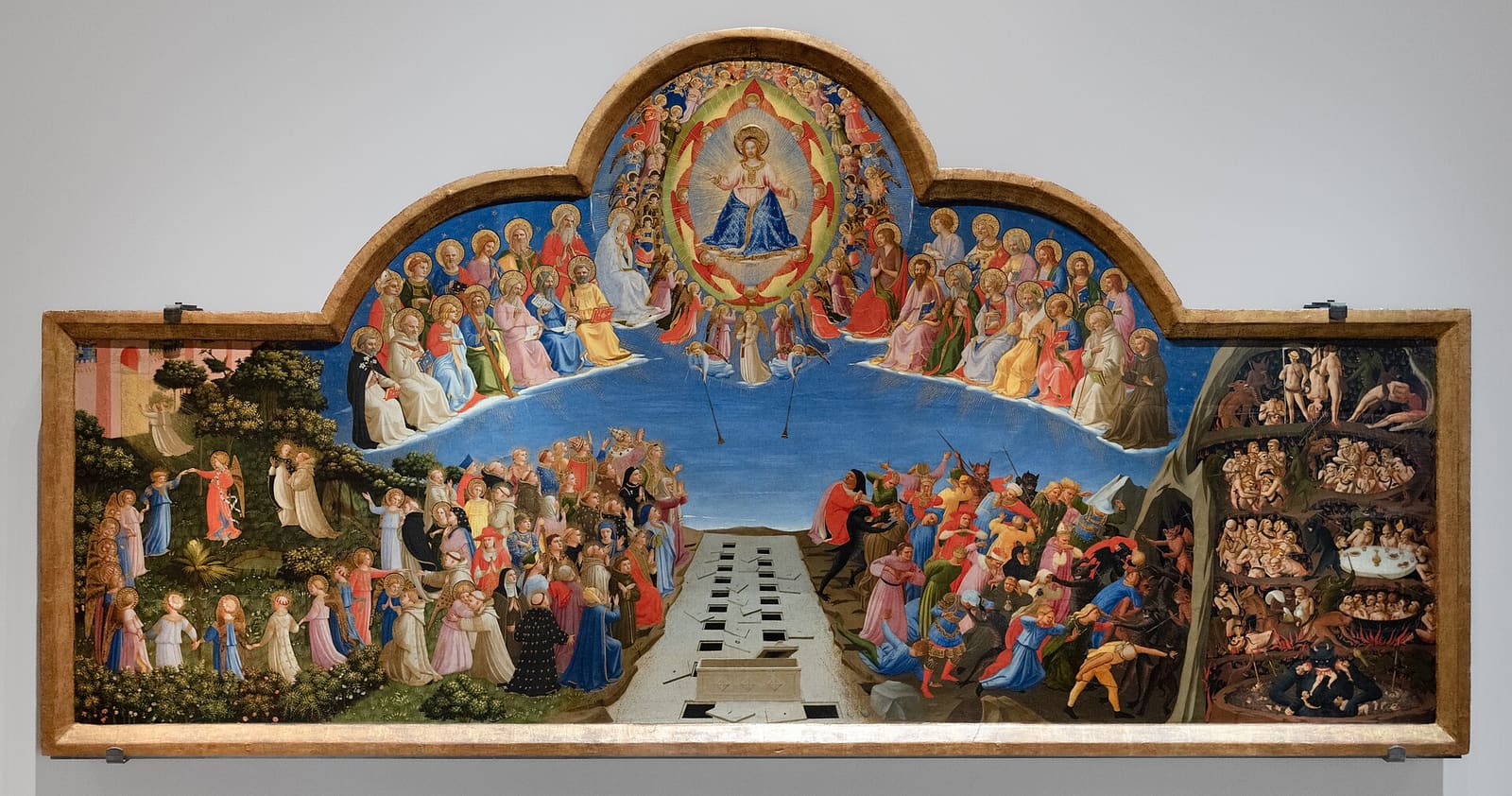
Jesus speaks more than once of an “unquenchable fire” (Mark 9:43) and describes the final separation of the just and the unjust (Matthew 25:31-46). He gives these warnings out of love, as a doctor warns a patient.
What the Church Teaches
The Catechism is clear and careful. To die in mortal sin without repenting and accepting God’s merciful love means remaining separated from Him forever by our own free choice. “This state of definitive self-exclusion from communion with God and the blessed is called ‘hell’” (CCC 1033).
Several points are important:
- Its chief punishment is separation from God, in whom alone we can find the life and happiness for which we were made (CCC 1035).
- God predestines no one to go to hell. It takes a willful turning away from God, and persistence in it until the end (CCC 1037).
- The teaching is a call to responsibility and conversion (CCC 1036).
- The Church prays that no one should be lost (CCC 1058).
Why Is Hell Eternal?
The Catechism explains that death ends our time of grace and mercy, and our earthly journey (CCC 1013, 1021). Just as there is no repentance for the angels after their fall, “there is no repentance for men after death” (CCC 393).
God does not stop loving anyone. The soul that has wholly and finally refused love has placed itself where that love cannot be received. It is the most serious possible consequence of being truly free.
Visions of Hell
Some saints have reported frightening visions of hell, among them St. Teresa of Avila and the children of Fatima. Some older spiritual books collect such stories at length. These are private revelations or pious accounts, and Catholics are not required to accept their details (CCC 67). Their images should not take the place of the sober teaching of the Church.
St. John Paul II reminded us in 1999 that the images of Scripture must be correctly interpreted. Hell, he explained, is the state of those who freely and definitively separate themselves from God.
Do Not Despair
If this subject frightens you, remember that Christ died to save you, and that His mercy is greater than any sin. Those who worry about having offended God are usually very far from the hardened refusal the Church is describing. Go to confession, and trust.
The Fatima Prayer (Traditional)
O my Jesus, forgive us our sins, save us from the fires of hell, lead all souls to heaven, especially those in most need of Thy mercy. Amen.
Continue Reading
Read about Catholic beliefs on death and the Church’s teaching on heaven, or learn how to go to confession.
Frequently asked questions
Why is hell eternal?
At death our time of free choice ends and our decision for or against God becomes definitive (CCC 393, 1021). Hell lasts because that refusal is final. It is not God who stops loving.
Is hell a real place?
The Church's teaching focuses on hell as a state of being. St. John Paul II explained in 1999 that the images in Scripture express the frustration and emptiness of life without God.
Are many people in hell?
We do not know. The Church has never said that any specific person is damned. St. John Paul II taught that damnation remains a real possibility, but that we are not given to know who, if anyone, is in that state.
Would a loving God send people to hell?
God wills that all be saved (1 Timothy 2:4). Hell is the consequence of a person's free and persistent refusal of His love. God respects human freedom even to that point.
Sources
- Catechism of the Catholic Church 393, 1021, 1033-1037, 1056-1058
- St. John Paul II, General Audience on Hell (July 28, 1999)
- Matthew 25:31-46; Mark 9:43; 1 Timothy 2:4; 2 Peter 3:9