What Is the Catholic Bible Called?
Quick answer
The Catholic Bible has no special name of its own. Catholics call it the Holy Bible, Sacred Scripture or the Word of God. What makes a Bible Catholic is its canon of 73 books, 46 in the Old Testament and 27 in the New, and its approval by the Church. Individual Catholic editions have names, such as the Latin Vulgate, the Douay-Rheims, the New American Bible Revised Edition (NABRE), the Revised Standard Version Catholic Edition (RSV-CE) and the Jerusalem Bible.
Key takeaways
- The Catholic Bible is simply called the Holy Bible or Sacred Scripture.
- It contains 73 books, 46 in the Old Testament and 27 in the New Testament.
- Its seven extra Old Testament books are called the deuterocanonical books.
- The Latin Vulgate was the Church's standard Bible for over a thousand years.
- In the United States, the NABRE is used for the readings at Mass.
People sometimes ask what the Catholic Bible is called, as if it had a different title from other Bibles. The short answer is that it is called what Christians have always called it: the Holy Bible, or Sacred Scripture. What makes it Catholic is not its name but its contents and the Church that hands it on.
The Bible, Sacred Scripture, the Word of God
The word Bible comes from the Greek ta biblia, “the books,” because the Bible is a library of many books written over more than a thousand years. Catholics also speak of Sacred Scripture, Holy Writ or the Word of God. The Catechism teaches that the Church “has always venerated the divine Scriptures as she venerated the Body of the Lord” (CCC 103).
What Makes a Bible Catholic: 73 Books
A Catholic Bible contains 73 books:
- 46 in the Old Testament, and
- 27 in the New Testament.
The New Testament is the same in Catholic, Orthodox and Protestant Bibles. The difference is in the Old Testament. Catholic Bibles include seven books, Tobit, Judith, 1 and 2 Maccabees, Wisdom, Sirach (Ecclesiasticus) and Baruch, plus longer forms of Esther and Daniel. These are called the deuterocanonical books. They were part of the Greek Old Testament, the Septuagint, used by the early Church. Most Protestant Bibles, following the Reformers, leave them out or print them separately as the “Apocrypha,” which is why they usually have 66 books.
The Catholic list of books, the canon, was recognized by early councils such as Rome (382), Hippo (393) and Carthage (397), and solemnly defined by the Council of Trent in 1546 (CCC 120). For the full story, read our guide to the Catholic Bible and its 73 books.
Names of Catholic Bibles
While the Bible itself has no special name, individual editions and translations do. These are the ones you are most likely to hear:
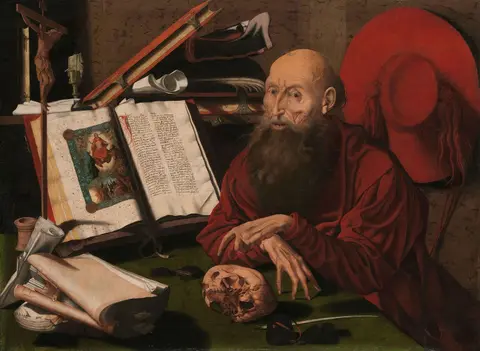
- The Vulgate. St. Jerome’s Latin translation, made around AD 382–405 from the Hebrew and Greek. It was the Bible of the Western Church for more than a thousand years. In 1979 Pope St. John Paul II promulgated the Nova Vulgata, a revised Latin text, as the Church’s official Latin edition.
- The Douay-Rheims Bible. The classic English Catholic translation from the Vulgate, published in Reims (New Testament, 1582) and Douai (Old Testament, 1609–10), later revised by Bishop Richard Challoner in the 1750s.
- The New American Bible Revised Edition (NABRE). The translation used for the readings at Mass in the United States, in its lectionary form.
- The Revised Standard Version, Catholic Edition (RSV-CE and RSV-2CE). A popular, accurate translation often used in study Bibles and in the English edition of the Catechism.
- The Jerusalem Bible and New Jerusalem Bible. Translations based on the work of the Dominican École Biblique in Jerusalem, long used for the Mass readings in Britain and other English-speaking countries.
- The English Standard Version, Catholic Edition (ESV-CE). A newer translation now adopted for the lectionary in several English-speaking countries, including England and Wales.
- In Spanish, common Catholic Bibles include the Biblia de Jerusalén, the Biblia de América, the Libro del Pueblo de Dios and the classic Nácar-Colunga.
Look for a note that the edition has been approved by a bishops’ conference, often printed on the first pages as an imprimatur.
What About the King James Version?
The King James Version (1611) is a beautiful and influential English Bible, but it is a Protestant translation made from Hebrew and Greek texts, not from the Vulgate, and in most editions it lacks the deuterocanonical books. Catholics are not forbidden to read it, but for prayer and study the Church encourages approved Catholic translations with helpful notes (Dei Verbum 22, 25).
How to Start Reading
The Second Vatican Council asked that “easy access to Sacred Scripture should be provided for all the Christian faithful” (Dei Verbum 22). A good way to begin is with one of the Gospels, such as Mark or Luke, or with the readings of the day’s Mass. You might also try reading the Catholic Bible in chronological order.
Prayer Before Reading the Bible (Original Prayer)
Lord God, You speak to us in Your holy Word. Open my mind to understand it, my heart to receive it, and my life to live it. Let every page lead me closer to Jesus, the Word made flesh. Amen.
Continue Reading
Read our guide to the Catholic Bible and its 73 books, learn about the Dead Sea Scrolls, or explore the Book of Tobit.
Frequently asked questions
What is the official Bible of the Catholic Church?
The Church's official Latin text is the Nova Vulgata (New Vulgate), promulgated by Pope St. John Paul II in 1979. Each bishops' conference approves translations for its own language; in the United States the New American Bible is used at Mass.
Is the King James Version a Catholic Bible?
No. The King James Version (1611) is a Protestant translation made from Hebrew and Greek texts, and it does not include the deuterocanonical books as part of the Old Testament. Catholics use approved translations such as the NABRE, RSV-CE or Douay-Rheims.
How many books are in the Catholic Bible?
73. Protestant Bibles usually have 66, because they leave out Tobit, Judith, 1 and 2 Maccabees, Wisdom, Sirach and Baruch, along with parts of Esther and Daniel.
Sources
- Council of Trent, Decree on the Canonical Scriptures (1546)
- Catechism of the Catholic Church, nos. 120, 138
- Second Vatican Council, Dei Verbum (1965), no. 22
- United States Conference of Catholic Bishops, Approved Translations of the Bible