Our Lady of Guadalupe Story: St. Juan Diego, the Tilma and December 12
Quick answer
In December 1531, the Virgin Mary appeared four times to St. Juan Diego, a native Mexican convert, on Tepeyac hill near Mexico City. She asked for a church to be built there. As a sign for the bishop, she sent Juan Diego with roses in his cloak, or tilma, and when he opened it her image was on the cloth. Her feast is December 12.
Key takeaways
- Mary appeared to St. Juan Diego on Tepeyac hill, near Mexico City, between December 9 and 12, 1531.
- The sign for Bishop Juan de Zumárraga was roses out of season and Mary's image on Juan Diego's tilma, which is still kept in the Basilica of Guadalupe.
- Her best-known words to Juan Diego are "Am I not here, I who am your mother?"
- Her feast is December 12; St. Juan Diego, canonized in 2002, is honored on December 9.
- Like every approved apparition, Guadalupe is a private revelation: Catholics may embrace it freely, and it always points to Christ (CCC 67).
The story of Our Lady of Guadalupe began on a cold December morning in 1531, when the Virgin Mary appeared to a humble native Mexican man, St. Juan Diego, on Tepeyac hill near Mexico City. She asked for a church to be built there, and as a sign for the bishop she left her image on his cloak, called a tilma. That image still hangs in the Basilica of Guadalupe, and her feast is celebrated every December 12.
It is one of the best-loved stories in the Catholic world. Here is what happened, what the image means, and how you can pray to Our Lady of Guadalupe this Advent.
Who Was St. Juan Diego?
Juan Diego Cuauhtlatoatzin was a native Nahuatl-speaking man from Cuauhtitlán, near what is now Mexico City. He was baptized as an adult by Franciscan missionaries a few years after the Spanish conquest, and he took his faith seriously. He often walked many miles to attend Mass and religious instruction.
He was poor, married and later widowed, and he called himself a “nobody.” That is exactly the kind of person God loves to choose. Pope St. John Paul II beatified him in 1990 and canonized him in Mexico City on July 31, 2002. His feast day is December 9.
The Our Lady of Guadalupe Story, Day by Day
The account comes to us mainly from the Nican Mopohua, a 16th-century narrative written in Nahuatl, the Aztec language, and published in 1649. In short, it tells of four meetings over four days.
- December 9, 1531. On his way to Mass, Juan Diego heard beautiful music on Tepeyac hill. A young lady, shining like the sun, called him by name. She said she was the ever-virgin Mary, Mother of the true God, and asked him to tell the bishop to build her a “little house,” a church, on that spot.
- The bishop hesitates. That same day Juan Diego went to Bishop Juan de Zumárraga, a Franciscan. The bishop listened kindly but was unsure. Juan Diego returned and asked the Lady to send someone more important. She answered that she had chosen him.
- December 10. The bishop asked for a sign. The Lady promised to give one the next day.
- December 12. Juan Diego’s uncle, Juan Bernardino, had fallen gravely ill, so Juan Diego took another path to fetch a priest. The Lady met him anyway. She comforted him with the words for which she is best remembered: “Am I not here, I who am your mother?” She told him his uncle was already healed, and sent him to the top of the hill to gather flowers.
There, on frozen rocky ground in December, he found Castilian roses in bloom. Mary arranged them in his tilma, a rough cloak woven from plant fiber, and sent him to the bishop.
When Juan Diego opened his tilma before Bishop Zumárraga, the roses fell to the floor. On the cloth was the image of the Virgin. The bishop fell to his knees. Juan Bernardino was indeed healed, and he said the Lady had told him she wished to be known as Holy Mary of Guadalupe. Scholars still discuss the origin of the name, which is also that of a famous Marian shrine in Spain.
What the Tilma Image Means
The image speaks in a language the Aztec people understood at once, and it still speaks to us:
- Clothed with the sun, standing on the moon. She recalls “a woman clothed with the sun, with the moon under her feet” (Revelation 12:1). She stands in front of the sun and moon the Aztecs worshiped, showing she is greater than them, yet not a goddess herself.
- Hands joined in prayer. She is not God; she prays to God. Everything about her points to her Son.
- A mantle of stars. A sign of heaven.
- A black sash at her waist. For the native people this sign was understood to mean that a woman was with child. So she is often honored as carrying Jesus, and many Catholics ask her prayers for mothers and unborn children.
- Her face. Her features and complexion are those of a mestiza, joining native and Spanish peoples.
In the years after 1531, great numbers of the native people of Mexico asked for Baptism. Guadalupe became a bridge between two peoples who had just met in war.
The Tilma Today and the Basilica of Guadalupe
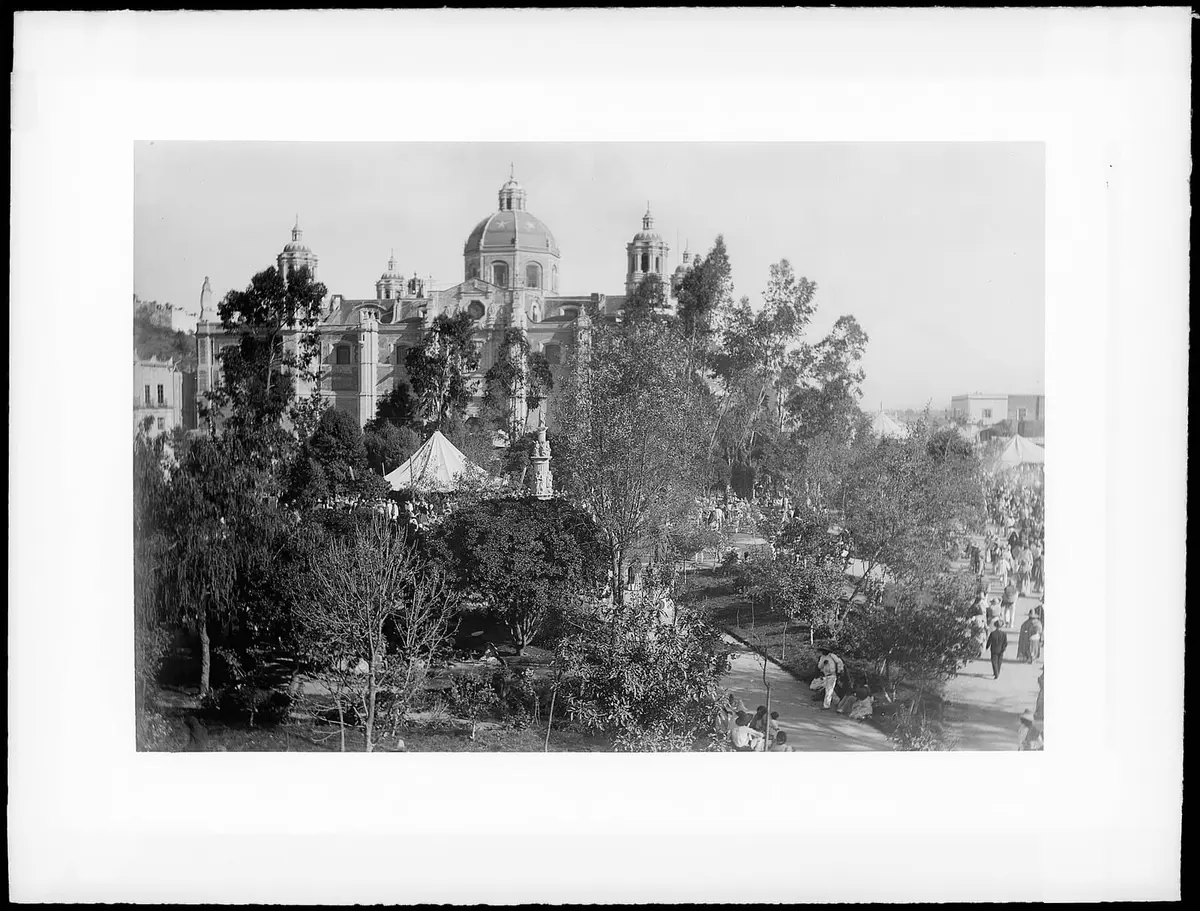
The tilma has now hung for almost five centuries, and it can still be seen in the Basilica of Our Lady of Guadalupe in Mexico City. In 1921, a bomb hidden in flowers exploded near the image. A heavy metal crucifix on the altar was twisted, but the tilma was not harmed. That crucifix is still kept at the shrine.
The Church has honored this devotion for centuries. Pope Benedict XIV approved a proper Mass and Office for December 12 in 1754. In 1999, in his letter Ecclesia in America (no. 11), Pope St. John Paul II honored her as Mother and evangelizer of all America and set her feast for the whole continent.
Like Lourdes and Fatima, Guadalupe is a private revelation. The Church teaches that such revelations do not add to the faith but help us live it more fully in a certain time and place (CCC 67). Our Lady never draws attention to herself. Like her Magnificat, “my soul proclaims the greatness of the Lord” (Luke 1:46), her whole message is about God. You can read more in what the Catholic Church believes about Mary and why Catholics pray to Mary.
How to Celebrate December 12
The feast falls in Advent, just four days after the Feast of the Immaculate Conception. A few simple ways to keep it:
- Go to Mass on December 12; many parishes hold an early morning Mass with songs called mañanitas.
- Pray the Rosary with your family. Our Rosary for today guide shows which mysteries to pray.
- Place roses before an image of Our Lady at home.
- Remember St. Juan Diego on December 9 and ask him to teach you humble trust.
If you are just starting the season, see when Advent starts in 2026.
Prayers to Our Lady of Guadalupe
Prayer to Our Lady of Guadalupe (Original Prayer)
Holy Mary of Guadalupe,
Mother of the true God for whom we live,
you came to Juan Diego with tenderness and called him by name.
Look upon me, too, and upon all I carry in my heart.
When I am afraid, remind me that you are here, my mother.
Lead me always to your Son, Jesus,
and help me to do whatever He tells me.
Amen.
Prayer for Families and the Unborn (Original Prayer)
Our Lady of Guadalupe,
you carried Jesus beneath your heart.
Watch over every mother and every child waiting to be born.
Protect our families, heal what is broken among us,
and make our homes little houses where God is welcome.
Amen.
Prayer to St. Juan Diego (Original Prayer)
St. Juan Diego,
you obeyed the Mother of God with a simple and faithful heart.
Pray for me, that I may trust God even when I feel small,
and carry His love to others as you carried the roses.
Amen.
Hail Mary
Hail Mary, full of grace,
the Lord is with thee.
Blessed art thou among women,
and blessed is the fruit of thy womb, Jesus.
Holy Mary, Mother of God,
pray for us sinners,
now and at the hour of our death.
Amen.
End with the short invocation many Catholics love: “Our Lady of Guadalupe, pray for us. St. Juan Diego, pray for us.”
Frequently asked questions
When is the feast of Our Lady of Guadalupe?
The feast is December 12, the day the image appeared on St. Juan Diego's tilma in 1531. In 2026 it falls on a Saturday, during Advent. In the United States it is a feast, not a holy day of obligation, but many parishes hold a special Mass, often with early morning songs called mañanitas. St. Juan Diego's own feast is December 9.
Where is the tilma of Our Lady of Guadalupe today?
The tilma hangs above the main altar of the Basilica of Our Lady of Guadalupe at the foot of Tepeyac hill in Mexico City. A newer basilica was built beside the old one and consecrated in 1976, and the image was moved there. It is one of the most visited Catholic shrines in the world, especially around December 12.
Do Catholics have to believe in Our Lady of Guadalupe?
No. The Church teaches that approved apparitions are private revelations. They add nothing to the faith handed down from the Apostles, and no Catholic is bound to believe them (CCC 67). Still, the popes have honored Our Lady of Guadalupe for centuries, approved her Mass and feast, and canonized St. Juan Diego, so the devotion is warmly encouraged.
Why is Our Lady of Guadalupe called Patroness of the Americas?
Popes over the centuries named her patroness first of Mexico and then of Latin America. In 1999, in Ecclesia in America, Pope St. John Paul II honored her as Mother and evangelizer of the whole American continent, North and South, and set her feast on December 12 for all of America. Her image united native and Spanish peoples in one faith.
Sources
- Catechism of the Catholic Church 67 (private revelations)
- Catechism of the Catholic Church 971, 2675-2679 (devotion to Mary)
- Revelation 12:1
- Luke 1:46-55
- Pope St. John Paul II, Ecclesia in America (1999), no. 11
- Nican Mopohua (16th-century Nahuatl account, published 1649)